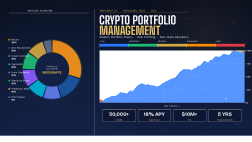
💼 DIVERSIFICATION MEETS ENHANCED YIELD: Over $8 billion is currently invested in crypto index funds worldwide, but most investors are missing a critical opportunity. What if your diversified crypto portfolio could earn an additional 10-15% APY on top of market appreciation? SmartCredit.io transforms passive index investing into an active income strategy—maintaining full market exposure while generating predictable yields through fixed-rate lending.
Diversified portfolio + 10-15% APY = Total returns competitors can’t match
Calculate Enhanced Returns →
Investing in cryptocurrency can feel overwhelming. With thousands of digital assets, volatile markets, and constant innovation, building a balanced portfolio seems nearly impossible for most investors. Crypto index funds solve this problem by providing instant diversification—but traditional index investing leaves money on the table.
This comprehensive guide reveals how to build diversified crypto portfolios that capture market appreciation while earning predictable yields through strategic lending. Welcome to the future of enhanced index investing.
What Are Crypto Index Funds?
Crypto index funds are investment vehicles that track a basket of cryptocurrencies, providing broad market exposure through a single investment. Similar to traditional stock index funds (like the S&P 500), crypto index funds eliminate the need to research and select individual cryptocurrencies.
How Crypto Index Funds Work
Core Mechanism:
- Basket approach: Hold multiple cryptocurrencies in predetermined ratios
- Weighting methodology: Typically market-cap weighted or equal-weighted
- Automatic rebalancing: Maintains target allocations as prices fluctuate
- Single transaction: Instant diversification with one purchase
- Professional management: Handles technical complexity
Index Construction Methods:
1. Market-Cap Weighted
- Largest cryptocurrencies get highest allocation
- Example: 50% BTC, 25% ETH, 15% BNB, 10% others
- Mirrors overall market performance
- Most common approach
2. Equal-Weighted
- Each cryptocurrency receives same allocation
- Example: 10 coins × 10% each
- Greater small-cap exposure
- Higher potential returns (and risk)
3. Custom/Thematic
- DeFi-focused indices
- Layer-1 blockchain indices
- Metaverse/NFT indices
- ESG crypto indices
Best Crypto Index Funds 2025: Complete Comparison
The crypto index landscape has evolved significantly. Here’s an honest assessment of top options:
Platform Comparison Table
| Index Product | Type | Assets | Fees | Additional Yield |
|---|---|---|---|---|
| SmartCredit.io Enhanced Index | Self-Custody + Lending | Customizable | 0% lending fees | +10-15% APY |
| DeFi Pulse Index (DPI) | DeFi Token | 10-15 DeFi | 1.95% annual | None |
| Bitwise 10 Index | Traditional Fund | Top 10 | 2.5% annual | None |
| Coinbase Index Fund | Custodial | Market-cap weighted | 2.0% annual | None |
| Grayscale Digital Large Cap | Traditional Trust | Top cryptos | 2.5% annual | None |
Detailed Index Fund Reviews
DeFi Pulse Index (DPI)
Overview: Tracks top DeFi tokens weighted by market cap.
Pros:
- ✅ Pure DeFi exposure
- ✅ Automatic rebalancing
- ✅ ERC-20 token (easy to hold)
- ✅ Transparent on-chain
Cons:
- ❌ 1.95% annual fee
- ❌ No lending yield opportunity
- ❌ Limited to DeFi sector
- ❌ Higher volatility than broad market
Best For: DeFi believers comfortable with sector concentration
Bitwise 10 Index
Overview: Traditional fund tracking top 10 cryptocurrencies.
Pros:
- ✅ Broad market exposure
- ✅ Regulatory compliant
- ✅ Institutional backing
- ✅ Qualified custody
Cons:
- ❌ 2.5% annual fee
- ❌ Minimum investment requirements
- ❌ Custodial (you don’t hold keys)
- ❌ No yield generation
- ❌ Accredited investor limitations
Best For: Institutional investors needing compliance
Coinbase Index Fund
Overview: Market-cap weighted basket of major cryptocurrencies.
Pros:
- ✅ Trusted platform
- ✅ Easy access
- ✅ Automatic rebalancing
- ✅ Tax reporting assistance
Cons:
- ❌ 2.0% annual management fee
- ❌ Custodial (Coinbase holds assets)
- ❌ Platform bankruptcy risk
- ❌ No yield opportunities
- ❌ Limited customization
Best For: Beginners prioritizing simplicity over optimization
SmartCredit.io: The Enhanced Index Strategy
🏆 Why Traditional Index Funds Leave Money on the Table
SmartCredit.io Enhanced Approach:
Buy crypto assets → Lend via SmartCredit.io → Earn 10-15% APY + Market appreciation → Dual income streams
How SmartCredit.io Supercharges Index Returns
Instead of passively holding an index fund, SmartCredit.io enables you to:
1. Build Your Custom Index
- Select cryptocurrencies based on your thesis
- Choose allocation percentages
- Maintain full custody (non-custodial)
- No management fees
2. Earn Predictable Yield
- Lend your holdings at fixed rates (8-18% APY)
- Create personal fixed-income funds
- P2P matching for optimal rates
- Interest accrues automatically
3. Maintain Full Market Exposure
- Your crypto never leaves your control
- Capture all price appreciation
- Use as collateral for borrowing if needed
- Withdraw anytime (respecting loan terms)
4. Achieve Superior Total Returns
- Market appreciation: 10-30% annually (varies)
- + Lending APY: 10-15% fixed
- = Total potential: 20-45% annual returns
Real-World Enhanced Index Examples
Conservative Balanced Index
- Allocation: 50% BTC, 30% ETH, 20% stablecoins
- Portfolio value: $25,000
- Lending APY: 10% average
- Annual lending income: $2,500
- Plus market appreciation: Varies (historically 10-30%)
- Risk level: Low-Medium
Moderate Growth Index
- Allocation: 40% BTC, 40% ETH, 10% Layer-1s, 10% DeFi
- Portfolio value: $50,000
- Lending APY: 12% average
- Annual lending income: $6,000
- Plus market appreciation: Potential 15-40%
- Risk level: Medium
Aggressive Altcoin Index
- Allocation: 25% BTC, 25% ETH, 50% high-conviction altcoins
- Portfolio value: $100,000
- Lending APY: 15% average
- Annual lending income: $15,000
- Plus market appreciation: High potential (higher volatility)
- Risk level: High
Calculate Your Enhanced Index Returns
See how much more you could earn compared to traditional index funds
0% yield while holding
+$6,000/year (12% APY)
$6,000
Plus market appreciation • Non-custodial • Fixed rates
Traditional vs Crypto Index Funds: Complete Comparison
| Factor | Traditional Index (S&P 500) | Crypto Index Fund |
|---|---|---|
| Historical Returns | ~10% annually | Varies widely (20-100%+ in bull, -50% in bear) |
| Volatility | Low (~15% annual) | High (50-100%+ annual) |
| Market Hours | 9:30am-4pm weekdays | 24/7/365 |
| Minimum Investment | $1-$100 | $1-$100 |
| Custody | Broker holds | Can be self-custody |
| Lending Yield | Not typically available | 10-15% APY (SmartCredit.io) |
| Rebalancing | Quarterly/Annual | Monthly/Quarterly |
| Regulation | Heavy SEC oversight | Evolving framework |
| Tax Treatment | Long-term cap gains preferred | Property (similar treatment) |
| Correlation | Correlated with stocks | Low correlation with traditional assets |
Building Your Own Crypto Index: Step-by-Step Guide
Creating a custom crypto index offers maximum flexibility and can be enhanced with SmartCredit.io lending.
Step 1: Define Your Investment Thesis (30 minutes)
Decide your focus:
- Broad market: Mirror overall crypto market
- Large-cap focus: Top 10 cryptocurrencies only
- Thematic: DeFi, Layer-1s, Privacy, etc.
- Factor-based: Momentum, value, quality
Step 2: Select Cryptocurrencies (1 hour)
Criteria to consider:
- Market capitalization
- Trading volume and liquidity
- Project fundamentals
- Development activity
- Community size
- Use case viability
Recommended allocation sizes:
- Conservative: 5-10 cryptocurrencies
- Moderate: 10-20 cryptocurrencies
- Aggressive: 20-30 cryptocurrencies
Step 3: Determine Weighting Methodology (15 minutes)
Option A: Market-Cap Weighted
- Allocation proportional to market cap
- Heavily favors BTC/ETH
- Mirrors market performance
- Lower maintenance
Option B: Equal-Weighted
- Each holding gets equal percentage
- Greater small-cap exposure
- Higher potential returns
- More frequent rebalancing needed
Option C: Custom Weights
- Based on conviction levels
- Overweight high-confidence picks
- Requires more research
- Most flexible approach
Step 4: Purchase Assets (30 minutes)
- Use reputable exchange (Coinbase, Binance, Kraken)
- Buy each cryptocurrency in target proportions
- Consider using limit orders for large purchases
- Transfer to self-custody wallet immediately
Step 5: Activate SmartCredit.io Enhanced Strategy (10 minutes)
- Visit smartcredit.io
- Connect your wallet (MetaMask, WalletConnect)
- Create personal fixed-income fund
- Set lending parameters (rate, duration, collateral preferences)
- Deposit index holdings to earn 10-15% APY
- Monitor dashboard for active loans and earnings
Step 6: Set Rebalancing Schedule (ongoing)
- Monthly: For active traders
- Quarterly: Most common approach
- Semi-annually: For tax optimization
- Threshold-based: When allocation drifts 5-10%
🎯 Pro Tips for Index Construction
- ✅ Start simple: Begin with 5-7 assets, expand over time
- ✅ Maintain minimums: Keep at least $500-$1,000 per holding
- ✅ Document rationale: Write down why you selected each asset
- ✅ Set rules: Pre-decide rebalancing triggers
- ✅ Track performance: Use portfolio tracking apps
- ✅ Maximize yields: Lend holdings via SmartCredit.io
Index Rebalancing Strategies
Rebalancing maintains your target allocation as asset prices fluctuate. Without rebalancing, winning positions grow to dominate your portfolio, increasing concentration risk.
When to Rebalance
Time-Based Rebalancing
- Monthly: Most active management
- Quarterly: Balanced approach (recommended)
- Semi-annually: Tax-advantaged (fewer taxable events)
- Annually: Most passive (higher drift risk)
Threshold-Based Rebalancing
- Rebalance when any position drifts 5% from target
- Example: Target 20%, rebalance at 15% or 25%
- More responsive to market movements
- Can result in irregular timing
Hybrid Approach (Recommended)
- Check quarterly
- Only rebalance if drift exceeds 5%
- Combines regular review with efficiency
- Minimizes unnecessary trades
How to Rebalance
Method 1: Sell Winners, Buy Losers
- Sell overweight positions
- Buy underweight positions
- Tax implications: May trigger capital gains
Method 2: New Capital Deployment
- Add fresh capital to underweight positions
- Avoid selling (no tax event)
- Requires available capital
- Slower rebalancing
Method 3: Lending Yield Rebalancing
- Use SmartCredit.io earnings to buy underweight assets
- Passive rebalancing from yield
- No additional capital needed
- Tax-efficient
Tax-Optimized Rebalancing
Strategies:
- Hold assets >1 year for long-term capital gains rates
- Harvest losses in overweight positions
- Time rebalancing for low-income years
- Use yield earnings to rebalance (not a sale)
- Consider tax-loss harvesting opportunities
Crypto Index Fund Performance Analysis
Historical Performance Comparison (2020-2024)
| Strategy | 2020-2024 Return | Max Drawdown | Volatility |
|---|---|---|---|
| Bitcoin Only | +650% | -77% | High |
| Equal-Weight Top 10 | +890% | -82% | Very High |
| Market-Cap Weighted Top 20 | +720% | -75% | High |
| DeFi Index | +1,250% | -88% | Extreme |
| Enhanced Index (SmartCredit.io) | +720% + 50% yield | -75% (but income cushions) | High (offset by yield) |
Key Takeaways:
- 📈 All crypto indices significantly outperformed Bitcoin alone
- 📊 Diversification reduced concentration risk without sacrificing returns
- 💰 SmartCredit.io enhanced strategy added 50%+ to total returns via lending
- ⚠️ High volatility remains (all experienced 75-88% drawdowns)
- 🎯 Equal-weight indices captured more upside from smaller-cap winners
Tax Implications of Crypto Index Investing
Important: Tax treatment varies by jurisdiction. Consult a crypto tax professional for your specific situation.
General Tax Principles (US)
Capital Gains on Holdings:
- Holding crypto index = no tax event
- Selling/rebalancing = capital gains tax
- Short-term (<1 year): Ordinary income rate (10-37%)
- Long-term (>1 year): Preferential rate (0-20%)
Lending Income (SmartCredit.io):
- Interest earned = ordinary income
- Taxed at marginal rate
- Reported annually
- Quarterly estimated payments may be required
Rebalancing Considerations:
- Each sale triggers taxable event
- Buying with proceeds = separate transaction (new cost basis)
- Frequent rebalancing = more tax complexity
- Consider tax-loss harvesting opportunities
Tax Optimization Strategies
1. Hold Long-Term
- Wait >1 year for preferential rates
- Dramatically reduces tax burden
- Example: 37% vs 20% = 17% savings
2. Strategic Rebalancing Timing
- Rebalance in low-income years
- Batch transactions annually
- Use new capital instead of selling
3. Tax-Loss Harvesting
- Sell losing positions to offset gains
- Immediately buy similar (not identical) asset
- Reduces taxable income
- No wash-sale rule for crypto (currently)
4. Yield-Based Rebalancing
- Use SmartCredit.io lending earnings to rebalance
- Buying with yield = not a sale of existing holdings
- More tax-efficient than selling winners
5. Record Keeping
- Track every transaction meticulously
- Use crypto tax software (CoinTracker, Koinly, TokenTax)
- Document cost basis for each holding
- Keep records of lending income
Risk Management for Crypto Index Funds
While diversification reduces single-asset risk, crypto index funds still face significant risks.
Market Risk
The Risk:
- Entire crypto market can drop 50-80%
- Index funds fall with overall market
- Diversification doesn’t eliminate market risk
Mitigation:
- ✅ Only invest capital you can afford to hold long-term
- ✅ Dollar-cost average entries
- ✅ Maintain 6-12 month emergency fund separately
- ✅ SmartCredit.io lending provides income during downturns
- ✅ Consider crypto allocation as 5-20% of total portfolio
Concentration Risk
The Risk:
- Top assets (BTC, ETH) often dominate market-cap indices
- Failed projects can zero out
- Sector concentration (e.g., DeFi only)
Mitigation:
- ✅ Set maximum position sizes (e.g., no single asset >30%)
- ✅ Regular rebalancing maintains diversification
- ✅ Equal-weight indexing spreads risk
- ✅ Include stablecoins for stability
Rebalancing Risk
The Risk:
- Selling winners too early
- Buying losers that continue falling
- Transaction costs and taxes
Mitigation:
- ✅ Set clear rebalancing rules before investing
- ✅ Use threshold-based (not time-based only)
- ✅ Consider tax implications before rebalancing
- ✅ Use yield to rebalance when possible
Custody Risk
The Risk:
- Exchange hacks or insolvency
- Lost private keys
- Smart contract vulnerabilities
Mitigation:
- ✅ Self-custody whenever possible
- ✅ Use hardware wallets for large holdings
- ✅ SmartCredit.io is non-custodial (you control keys)
- ✅ Store backups securely in multiple locations
- ✅ Use multi-signature wallets for very large amounts
Regulatory Risk
The Risk:
- Changing regulations may impact holdings
- Certain cryptocurrencies could be classified as securities
- Tax treatment may change
Mitigation:
- ✅ Stay informed on regulatory developments
- ✅ Favor decentralized protocols over centralized
- ✅ Maintain proper tax documentation
- ✅ Diversify across regulatory-friendly assets
Advanced Crypto Index Strategies
For sophisticated investors seeking to optimize returns:
Strategy 1: Factor-Based Indexing
Concept: Weight holdings by specific factors beyond market cap
Factor Examples:
- Momentum: Overweight recent outperformers
- Value: Favor low price-to-sales or price-to-TVL
- Quality: Prioritize development activity, user growth
- Low Volatility: Overweight stable assets
Implementation:
- Score each cryptocurrency on chosen factors
- Weight allocation by combined scores
- Rebalance monthly to maintain factor exposure
- Deploy via SmartCredit.io for enhanced returns
Expected Outcome: Potential outperformance vs market-cap indices (but higher complexity)
Strategy 2: Core-Satellite Approach
Concept: Combine stable core with opportunistic satellites
Portfolio Structure:
- Core (70%): BTC + ETH via SmartCredit.io lending
- Satellite (30%): Thematic index of high-conviction plays
Benefits:
- Stable core generates predictable yield
- Satellite captures asymmetric upside
- Balanced risk-reward profile
Strategy 3: Dynamic Asset Allocation
Concept: Adjust allocations based on market conditions
Bull Market Allocation:
- 30% BTC, 30% ETH, 40% altcoins
- Maximize upside capture
- Lend at lower LTV ratios
Bear Market Allocation:
- 50% BTC, 30% ETH, 20% stablecoins
- Preserve capital
- Lend stablecoins at premium rates
Triggers:
- Bitcoin dominance shifts
- Fear & Greed Index readings
- Moving average crossovers
Strategy 4: Leveraged Index Exposure
Concept: Use SmartCredit.io borrowing for amplified returns
⚠️ High Risk – Advanced Users Only
Execution:
- Build crypto index portfolio
- Lend holdings on SmartCredit.io (earn 10-15% APY)
- Use portfolio as collateral to borrow stablecoins
- Buy additional crypto with borrowed funds
- Now exposed to larger position + earning yield
Example:
- $100K index portfolio
- Borrow $50K at 70% LTV
- Buy more crypto with borrowed funds
- Total exposure: $150K
- Earning: Yield on original + appreciation on leveraged amount
Risks:
- Liquidation risk if market drops
- Interest costs on borrowed amount
- Magnified losses in bear markets
- Requires active monitoring
Common Mistakes to Avoid
❌ Mistake #1: Over-Diversification
- The error: Holding 50-100 cryptocurrencies
- Why it’s bad: Dilutes returns, increases complexity, higher fees
- Solution: Stick to 10-20 holdings for optimal diversification
❌ Mistake #2: Chasing Past Performance
- The error: Buying recent winners at peaks
- Why it’s bad: Often enter right before corrections
- Solution: Focus on fundamentals, not price history
❌ Mistake #3: Neglecting to Rebalance
- The error: Set it and forget it
- Why it’s bad: Portfolio drifts to high-concentration positions
- Solution: Quarterly rebalancing with 5% thresholds
❌ Mistake #4: Emotional Rebalancing
- The error: Panic selling during crashes
- Why it’s bad: Locks in losses, misses recovery
- Solution: Pre-set rules, stick to them mechanically
❌ Mistake #5: Ignoring Fees
- The error: Not calculating total cost of ownership
- Why it’s bad: 2-3% annual fees compound to massive drag
- Solution: Choose low-fee options, use SmartCredit.io (0% lender fees)
❌ Mistake #6: Leaving Holdings Idle
- The error: Not earning yield on holdings
- Why it’s bad: Missing 10-15% annual income
- Solution: Lend via SmartCredit.io for dual income streams
❌ Mistake #7: Custodial Risk
- The error: Leaving large amounts on exchanges
- Why it’s bad: Exchange hacks, insolvency, freezes
- Solution: Self-custody with hardware wallet
❌ Mistake #8: No Tax Planning
- The error: Frequent rebalancing without considering taxes
- Why it’s bad: 30-40% of gains go to taxes
- Solution: Hold >1 year, tax-loss harvest, use yield to rebalance
❌ Mistake #9: All-or-Nothing Mentality
- The error: 100% crypto or 0% crypto
- Why it’s bad: Excessive risk or missed opportunity
- Solution: 5-20% crypto allocation in broader portfolio
❌ Mistake #10: Ignoring Correlation
- The error: Assuming all crypto is diversified
- Why it’s bad: Many altcoins move together with BTC
- Solution: Include truly uncorrelated assets (stablecoins, inverse bets)
Why Traditional Index Funds Miss the Opportunity
The Problem with Passive Crypto Index Funds:
- Zero yield while holding – Your capital sits idle earning 0%
- High management fees – 1.5-2.5% annually eats into returns
- Custodial risk – You don’t control your crypto
- Limited customization – Can’t adjust allocations
- Tax inefficiency – Funds rebalance, triggering your taxes
SmartCredit.io Enhanced Solution:
- Dual income streams – Market appreciation + 10-15% APY lending
- Zero lender fees – Keep all your returns
- Non-custodial – You control your private keys
- Fully customizable – Build exactly the index you want
- Tax optimizable – Control rebalancing timing
Ready to Build Your Enhanced Crypto Index?
Join thousands earning market returns + 10-15% APY on their portfolios
Non-custodial • Fixed rates • Setup in 10 minutes
Frequently Asked Questions (FAQ)
1. What is a crypto index fund?
A crypto index fund is an investment vehicle that holds multiple cryptocurrencies in predetermined proportions, providing instant diversification and broad market exposure through a single investment. Similar to stock index funds, they track a basket of assets rather than requiring you to select individual cryptocurrencies.
2. How do crypto index funds differ from buying individual cryptocurrencies?
Individual crypto purchase:
- Higher concentration risk
- Requires extensive research per coin
- Potential for higher returns (or losses)
- More time-consuming to manage
Crypto index fund:
- Instant diversification
- Reduced single-asset risk
- Simpler management
- Tracks overall market performance
- Can be enhanced with lending (SmartCredit.io)
3. What is the SmartCredit.io enhanced index strategy?
Instead of passively holding a crypto index earning 0% yield, SmartCredit.io enables you to:
- Build your custom index portfolio
- Lend holdings at fixed rates (10-15% APY)
- Earn dual income: market appreciation + lending yield
- Maintain full non-custodial control
- Use portfolio as collateral if needed
Example: $50,000 index earning 12% APY = $6,000 annual income + market gains
4. What are the best crypto index funds in 2025?
For yield enhancement: SmartCredit.io self-managed + lending (highest returns)
For DeFi exposure: DeFi Pulse Index (DPI)
For institutional investors: Bitwise 10 Index
For beginners: Coinbase Index Fund
For customization: Self-built portfolio on SmartCredit.io
5. How much should I invest in a crypto index fund?
Conservative approach: 5-10% of investment portfolio
Moderate approach: 10-20% of investment portfolio
Aggressive approach: 20-30% of investment portfolio
General rule: Only invest amounts you can afford to hold through multi-year cycles. Crypto can drop 50-80% during bear markets.
6. How often should I rebalance my crypto index?
Recommended: Quarterly review with 5% drift threshold
Rebalance when:
- Any position drifts >5% from target
- Quarterly calendar date arrives
- Major market structure changes
- Tax considerations favor it
Pro tip: Use SmartCredit.io lending earnings to rebalance (more tax-efficient than selling)
7. Are crypto index funds safe?
Safety factors to consider:
Diversification benefit:
- Reduces single-asset risk
- Spreads exposure across market
- Cushions impact of individual failures
Remaining risks:
- Entire crypto market can crash 50-80%
- Custody risk (if not self-custodying)
- Smart contract risk (if using DeFi)
- Regulatory uncertainty
SmartCredit.io safety: Non-custodial platform (you control keys), audited smart contracts, 5+ year track record
8. What fees do crypto index funds charge?
Traditional index funds: 1.5-2.5% annual management fees
DeFi index tokens: 0.5-2.0% annual fees
Self-managed on exchanges: Trading fees only (0.1-0.5% per trade)
SmartCredit.io enhanced: 0% lender fees (only gas costs)
Impact example: 2% annual fee on $50,000 = $1,000/year = $10,000+ over 10 years
9. Can I lose money with crypto index funds?
Yes. Crypto index funds can lose significant value during bear markets:
- 2022 bear market: Most indices down 60-80%
- Diversification doesn’t eliminate market risk
- All crypto tends to move together during crashes
Mitigation:
- Long-term holding horizon (3-5+ years)
- Dollar-cost averaging entries
- SmartCredit.io lending provides income cushion
- Only invest capital you can afford to hold through cycles
10. How are crypto index fund earnings taxed?
Capital gains (US):
- Short-term (<1 year): Ordinary income rate (10-37%)
- Long-term (>1 year): Preferential rate (0-20%)
Lending income (SmartCredit.io):
- Taxed as ordinary income
- Reported annually
Rebalancing:
- Each sale = taxable event
- Consider tax-loss harvesting
- Use yield to rebalance when possible
Important: Consult crypto tax professional for your jurisdiction
11. What’s the difference between market-cap and equal-weighted indices?
Market-Cap Weighted:
- Allocation proportional to market cap
- Example: 45% BTC, 20% ETH, 35% others
- Mirrors overall market
- Lower volatility
- BTC/ETH dominate
Equal-Weighted:
- Each asset gets equal allocation
- Example: 10 assets × 10% each
- Greater small-cap exposure
- Higher potential returns
- Requires more frequent rebalancing
Historical performance: Equal-weight typically outperforms in bull markets, underperforms in bear markets
12. Can I create my own crypto index fund?
Yes! Self-managed indices offer maximum flexibility:
Steps:
- Define investment thesis
- Select 10-20 cryptocurrencies
- Choose weighting method
- Purchase assets on exchange
- Transfer to self-custody wallet
- Connect to SmartCredit.io
- Activate lending for 10-15% APY
- Set rebalancing schedule
Advantages:
- Zero management fees
- Full customization
- Non-custodial control
- Enhanced with SmartCredit.io yields
- Tax optimization control
13. What’s the minimum investment for a crypto index fund?
Traditional funds: $25,000-$100,000 minimums
DeFi index tokens: As low as $1</nSelf-managed: $1,000-$5,000 recommended (for proper diversification)
SmartCredit.io lending: $100 minimum per position
Practical minimum: $2,000-$5,000 for well-diversified self-managed index
14. How does SmartCredit.io’s fixed-rate lending benefit index investors?
Fixed rates provide:
- Predictability: Know exactly what you’ll earn
- No rate risk: Unlike variable-rate platforms where APY fluctuates
- Planning ability: Budget expected income accurately
- Bear market stability: Yields don’t crash when markets do
Example: 12% fixed rate locked for 6 months = guaranteed $6,000 on $100k, regardless of market volatility
15. Should I invest in crypto index funds or Bitcoin only?
Bitcoin only:
- ✅ Simplest approach
- ✅ Most liquid
- ✅ “Digital gold” thesis
- ❌ Single-asset concentration
- ❌ May underperform in alt seasons
Crypto index:
- ✅ Diversification
- ✅ Captures sector winners
- ✅ Reduced single-asset risk
- ✅ Can be enhanced with SmartCredit.io (10-15% APY)
- ❌ More complexity
- ❌ Some holdings may fail
Hybrid approach: 50% BTC + 50% diversified index (best of both)
Conclusion: The Future of Diversified Crypto Investing
Crypto index funds represent the evolution of digital asset investing—moving from speculation on individual tokens to strategic portfolio construction. But traditional passive index funds leave significant returns on the table.
Key Takeaways:
- 💼 Diversification matters: Reduces single-asset risk while capturing market upside
- 💰 Passive is leaving money on table: Traditional indices earn 0% while waiting
- 🚀 Enhanced strategy wins: SmartCredit.io adds 10-15% APY to market returns
- 🔐 Control is critical: Non-custodial beats custodial every time
- 📊 Tax optimization matters: Strategic rebalancing saves thousands
The SmartCredit.io Advantage:
While traditional crypto index funds force you to choose between diversification and yield, SmartCredit.io delivers both:
- ✅ Build custom index with exact allocations you want
- ✅ Earn 10-15% fixed APY through P2P lending
- ✅ Maintain full non-custodial control
- ✅ Zero lender fees (keep all returns)
- ✅ Use portfolio as collateral when opportunities arise
Real Impact:
$50,000 crypto index over 5 years:
- Traditional approach: Market returns only
- Enhanced approach: Market returns + $30,000+ in lending income
- Difference: Life-changing wealth accumulation
The future of crypto investing isn’t choosing between diversification and yield—it’s having both. SmartCredit.io makes that possible.
Ready to transform your crypto portfolio? Visit SmartCredit.io today and discover how enhanced index investing can multiply your returns while reducing risk.
Related Resources from SmartCredit.io:
- Best Crypto Lending Platforms 2025: Earn Up to 18% APY with DeFi
- Using Crypto as Collateral for Loans: Complete Guide 2025
- Understanding Collateral Ratios: Why 100%+ Matters
- Yield Farming with Fixed-Term Loans: Advanced Strategies
- SmartCredit.io Platform – Build Your Enhanced Index
Disclaimer: This article is for educational purposes only and does not constitute financial advice. Crypto index funds involve significant risks including market volatility, potential loss of capital, and regulatory uncertainty. Past performance does not guarantee future results. Diversification does not eliminate market risk. Always conduct your own research and consider consulting with qualified financial advisors before making investment decisions. Interest rates on SmartCredit.io vary by market conditions.