DeFi & Cryptocurrency Blog

Read our latest blog posts about decentralized finance, blockchain and cryptocurrencies.

Home » Blog
No bank-run risk in DeFi - fixed-term lending on SmartCredit.io protects lenders - SmartCredit.io

No Bank-Run Risk: Why Fixed-Term DeFi Lending Protects Lenders Better Than Aave

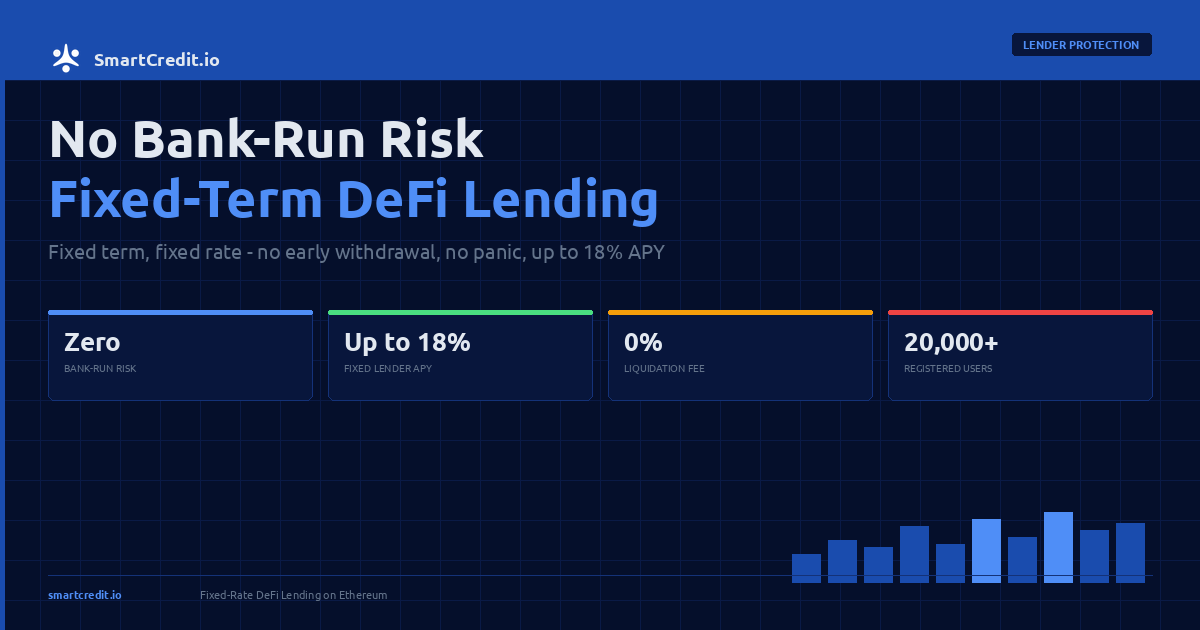
Fixed-term DeFi lending eliminates bank-run risk by design: lenders lock funds for a set period and cannot withdraw early, so there is no queue to trigger a cascade. SmartCredit.io’s fixed-term model means lender capital cannot exit mid-term, liquidations return collateral to borrowers at 0% fee, and the Loss Provision Fund covers any residual shortfall. Lenders earn fixed interest income plus weekly SMARTCREDIT token rewards with no variable-rate surprises.
DeFi collateral ratio by probability model on SmartCredit.io - 106% stablecoins, 112% ETH - SmartCredit.io

DeFi Collateral Ratio Explained: How SmartCredit.io Uses Probability to Set Your Borrowing Buffer

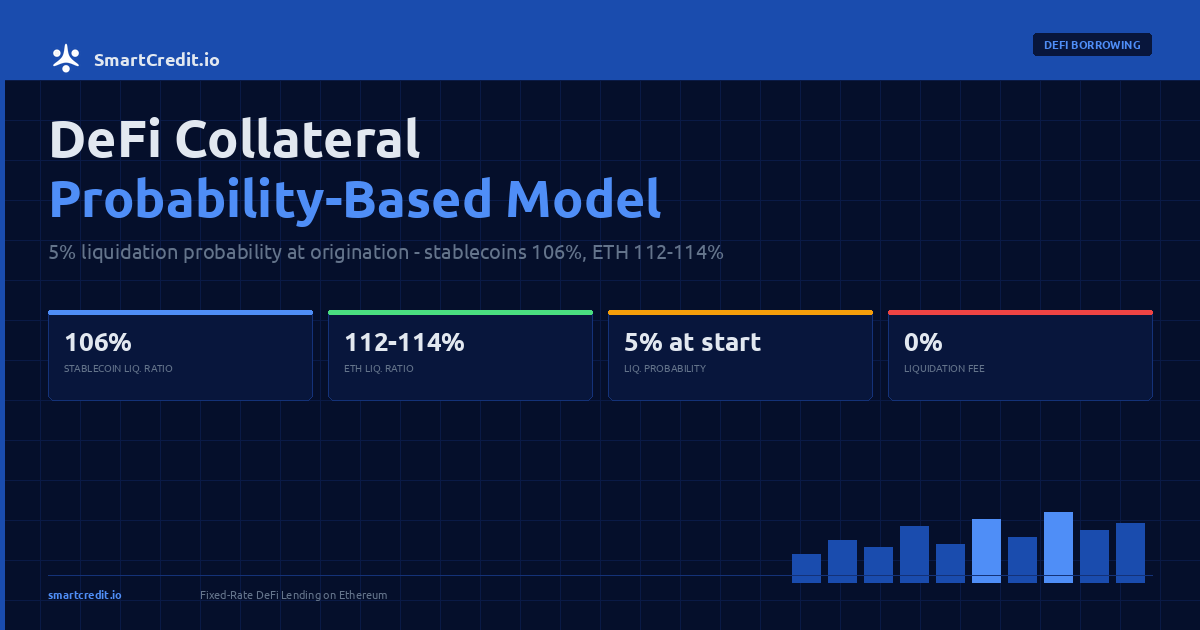
Most DeFi platforms set collateral ratios by governance vote or hardcoded asset tiers. SmartCredit.io calculates collateral requirements from a probability model: each loan starts at a 5% liquidation probability, with longer terms requiring more buffer to account for extended volatility exposure. Simple mode selects collateral automatically; Advanced Borrowing mode lets experienced users adjust within safety bounds. This post explains how probability-based collateral works and why it is more capital-efficient than fixed-ratio alternatives.

Portfolio MCP on SmartCredit.io - AI portfolio optimization via Claude and Model Context Protocol

Portfolio MCP: AI-Managed Crypto Portfolio Optimization via Claude

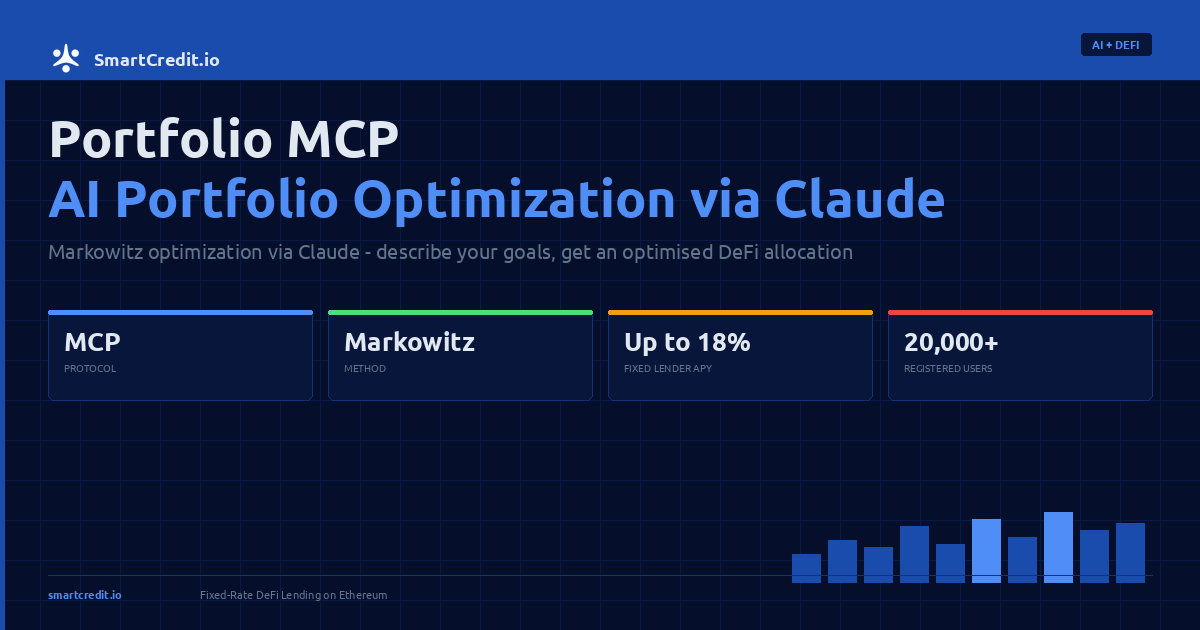
Portfolio MCP connects Claude AI to SmartCredit.io’s portfolio optimisation engine via the Model Context Protocol. Describe your DeFi goals in plain language – target yield, risk tolerance, sector exposure – and receive a Markowitz-optimised allocation backed by live CoinGecko data and historical rate analysis. The first DeFi lending platform to expose an MCP server, letting AI assistants run institutional-grade portfolio construction without manual calculations.

SmartCredit.io vs Aave 2026: fixed-rate vs variable DeFi lending platform comparison

SmartCredit vs Aave 2026: Fixed-Rate vs Variable DeFi Lending Compared

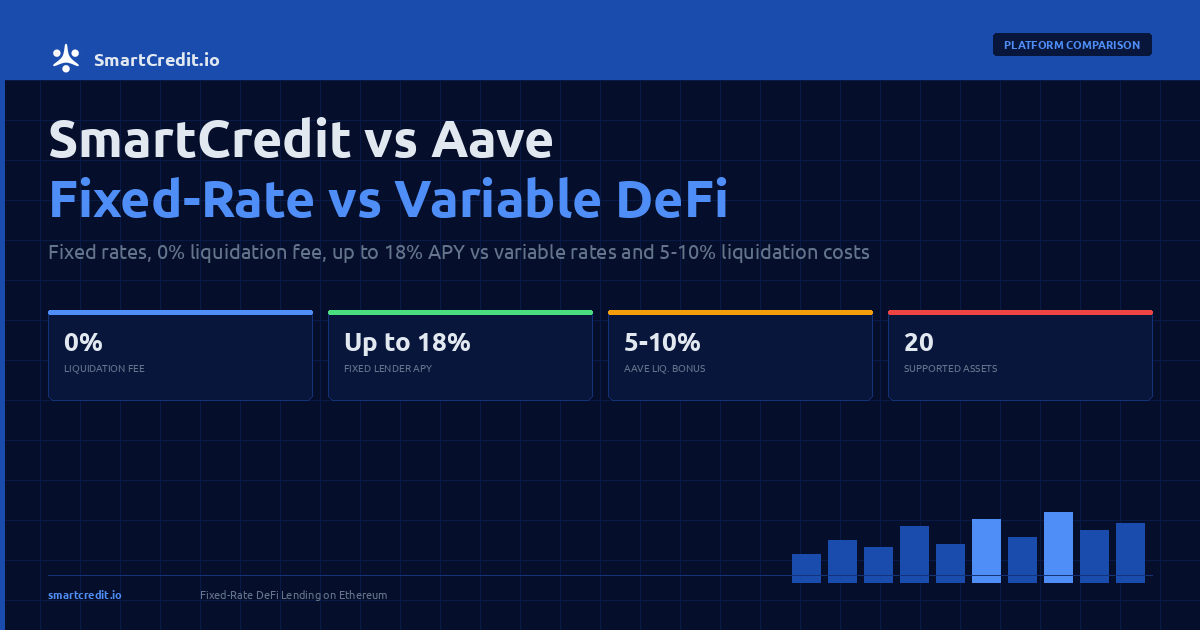
SmartCredit vs Aave in 2026: two fundamentally different lending models. Aave offers variable rates, earns 5-10% on every liquidation, and has no built-in warning system. SmartCredit.io offers fixed rates, earns 0% on liquidations, and returns remaining collateral to borrowers. Full comparison of rates, collateral ratios, lender yield, borrower protection and Loss Provision Fund vs Aave’s safety module.

Why Aave and Compound have no liquidation monitor - conflict of interest explained - SmartCredit.io

DeFi Liquidation Monitor: Why Aave Has No Warning System and SmartCredit.io Built One

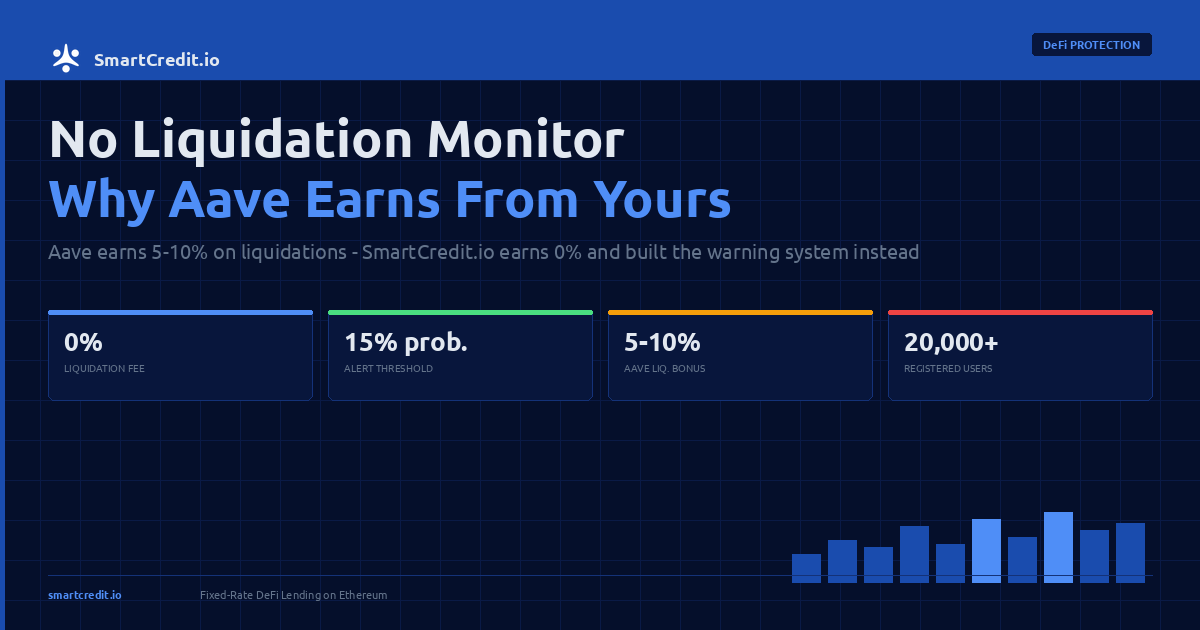
Aave, Compound and MakerDAO earn 5-10% on every liquidation and run their own liquidation bots – so building a warning system that reduces liquidations would directly cut their revenue. SmartCredit.io earns 0% on liquidations and built the Protection Agent: a tool that monitors Aave V3 and Compound V3 positions, models liquidation probability from collateral volatility, and sends Telegram alerts before the health factor falls below 1.0. No wallet connection required.

DeFi liquidation fee comparison: Aave charges up to 10%, SmartCredit.io charges 0% - SmartCredit.io

DeFi Liquidation Fee Exposed: Why Aave Takes Up to 10% and SmartCredit.io Charges 0%

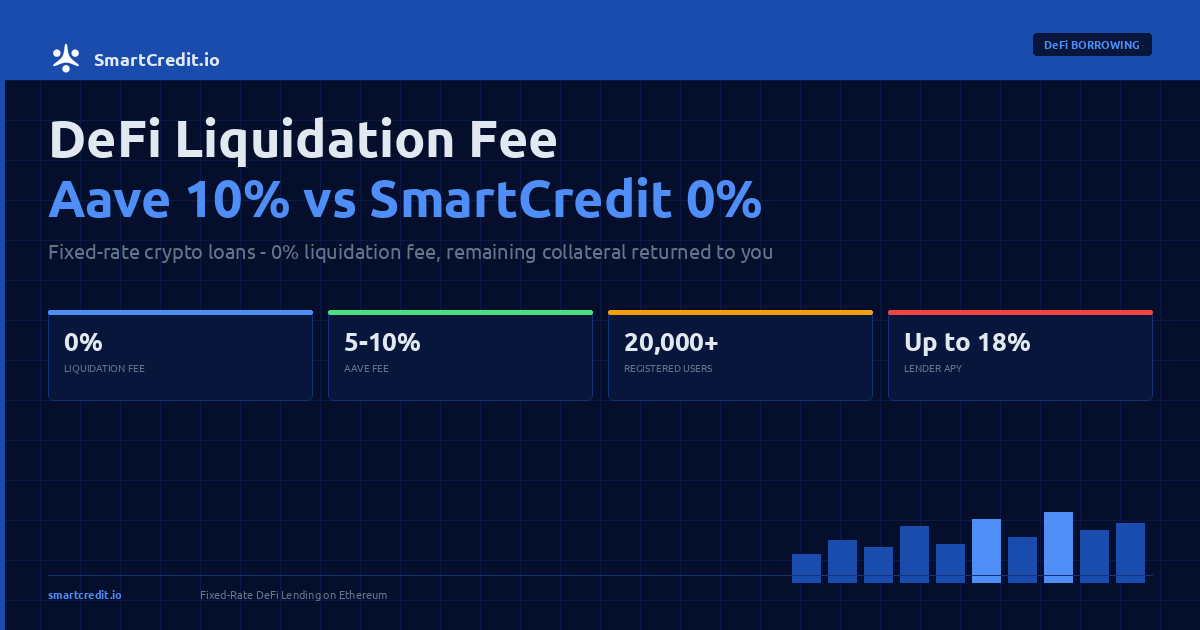
DeFi liquidation fees cost borrowers 5-10% of their collateral on Aave, Compound and MakerDAO – taken by protocol-run bots that profit from every liquidation event. SmartCredit.io charges 0% on liquidations and returns remaining collateral to the borrower’s credit line. This post explains why the fee exists, how it compounds losses during volatile markets, and what a zero-fee model changes for DeFi borrowers.

Institutional crypto lending on SmartCredit.io - fixed-rate DeFi for funds, DAOs and protocols - SmartCredit.io

Institutional Crypto Lending: Why Fixed-Rate DeFi Serves Funds and Protocols in 2026

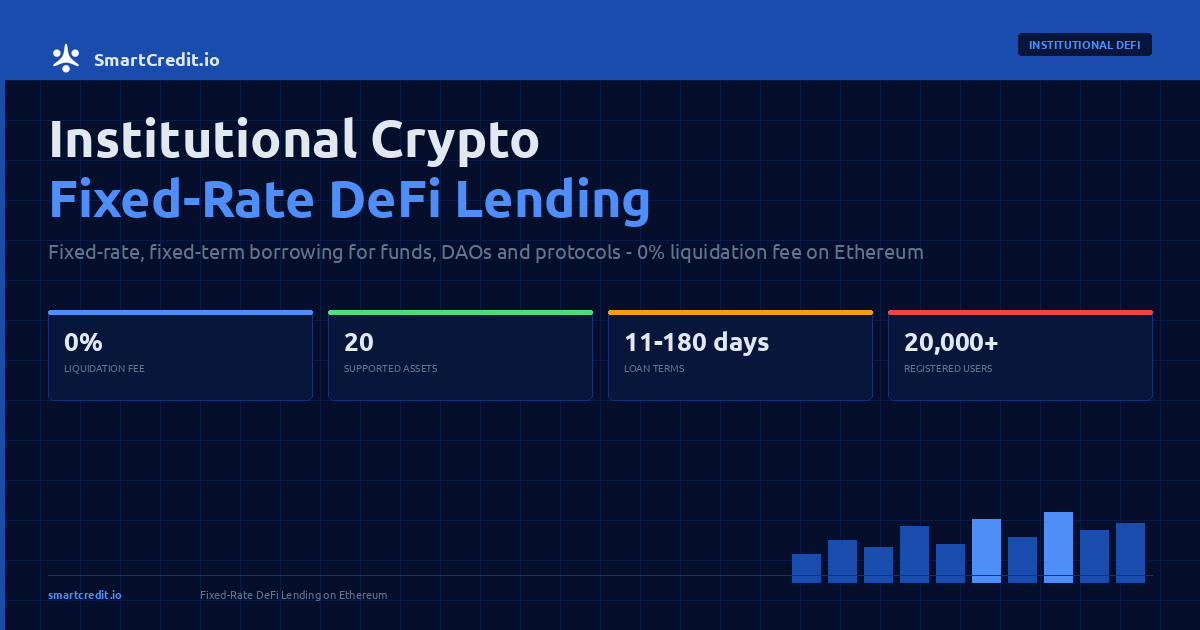
Institutional crypto lending requires predictable costs, transparent liquidation rules and credible lender protection – none of which variable-rate protocols reliably provide. SmartCredit.io’s fixed-rate, fixed-term model on Ethereum gives funds, DAOs and corporate treasuries a locked rate from day one, 0% liquidation fees, and a Loss Provision Fund that covers shortfalls if liquidation proceeds fall short. No governance surprises, no rate spikes mid-term.

Step-by-step guide to borrowing USDT and USDC with crypto collateral on SmartCredit.io

Crypto Collateral Loans Exposed: How to Borrow USDT and USDC in 2026

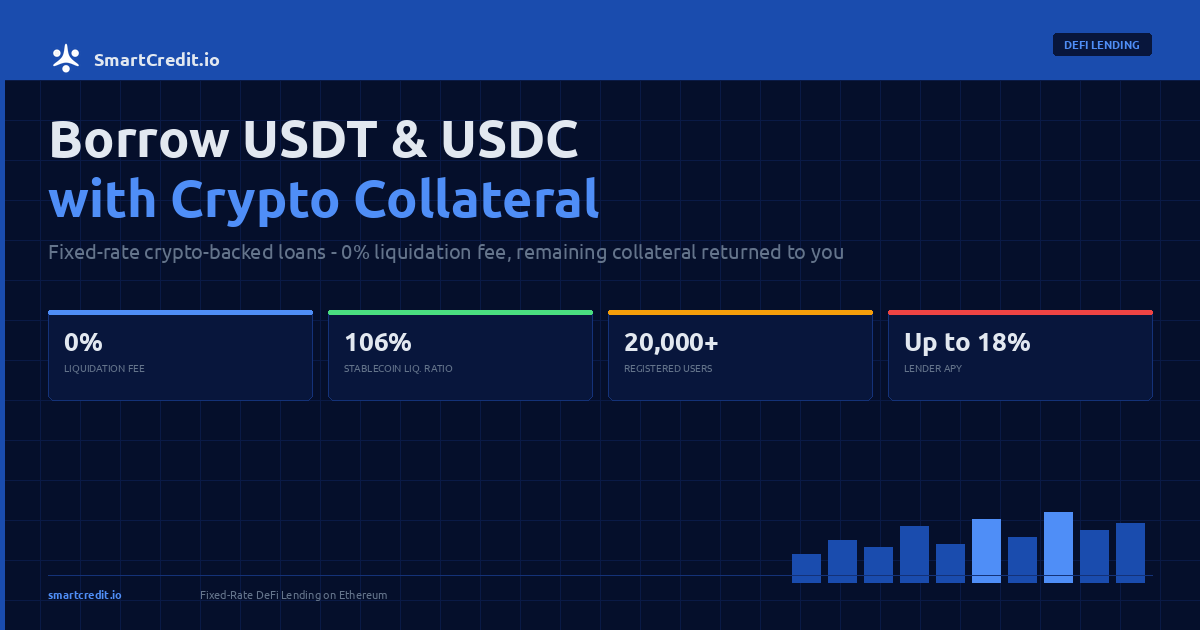
Crypto collateral loans let you borrow USDT or USDC against ETH, wBTC and other assets without selling. This guide explains how collateral ratios work in 2026, why SmartCredit.io sets them by liquidation probability rather than arbitrary governance votes, and how 0% liquidation fees and the Loss Provision Fund protect borrowers and lenders alike on Ethereum.

Broad Portfolio on SmartCredit.io - token-level Markowitz optimisation for crypto portfolios - SmartCredit.io

Broad Portfolio: Optimize Your Crypto Tokens with Modern Portfolio Theory

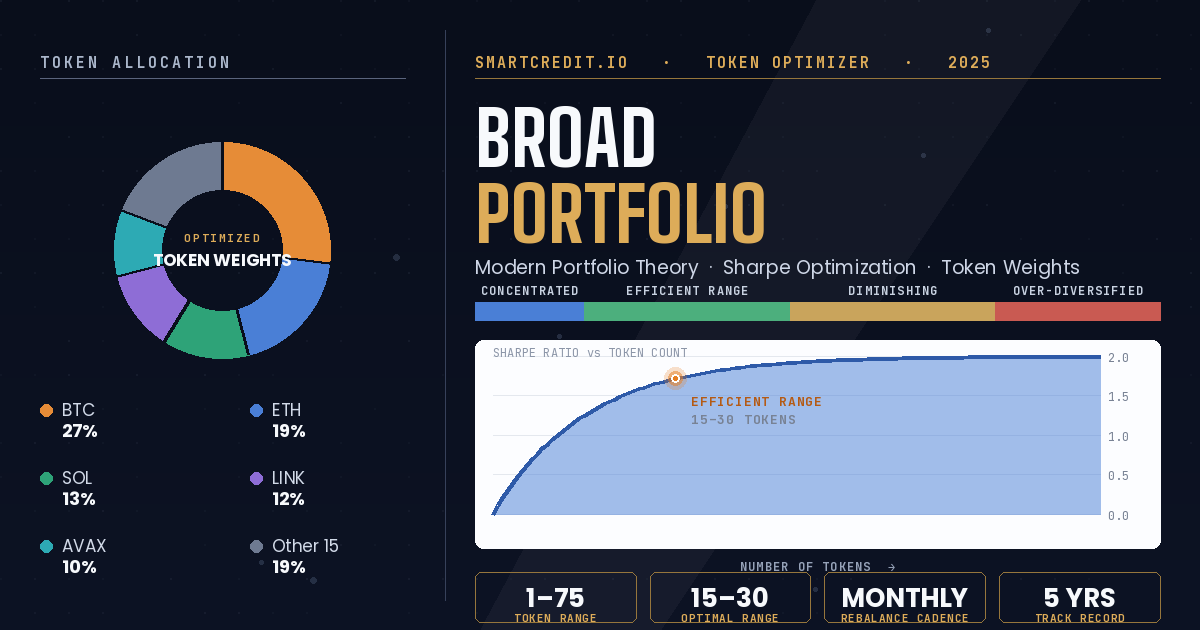
Most crypto portfolios are built on instinct, not mathematics. Broad Portfolio applies Markowitz Modern Portfolio Theory to any set of tokens you choose – calculating the exact allocation weights that maximise the Sharpe Ratio for your chosen risk level. Enter your tokens, pick a target, and get a mathematically derived portfolio with backtested performance data across 1, 3, 5 and 10-year horizons on SmartCredit.io.

Categories Based Portfolio on SmartCredit.io - sector-level crypto diversification using Modern Portfolio Theory - SmartCredit.io

Categories Based Portfolio: Sector-Level Crypto Diversification with MPT

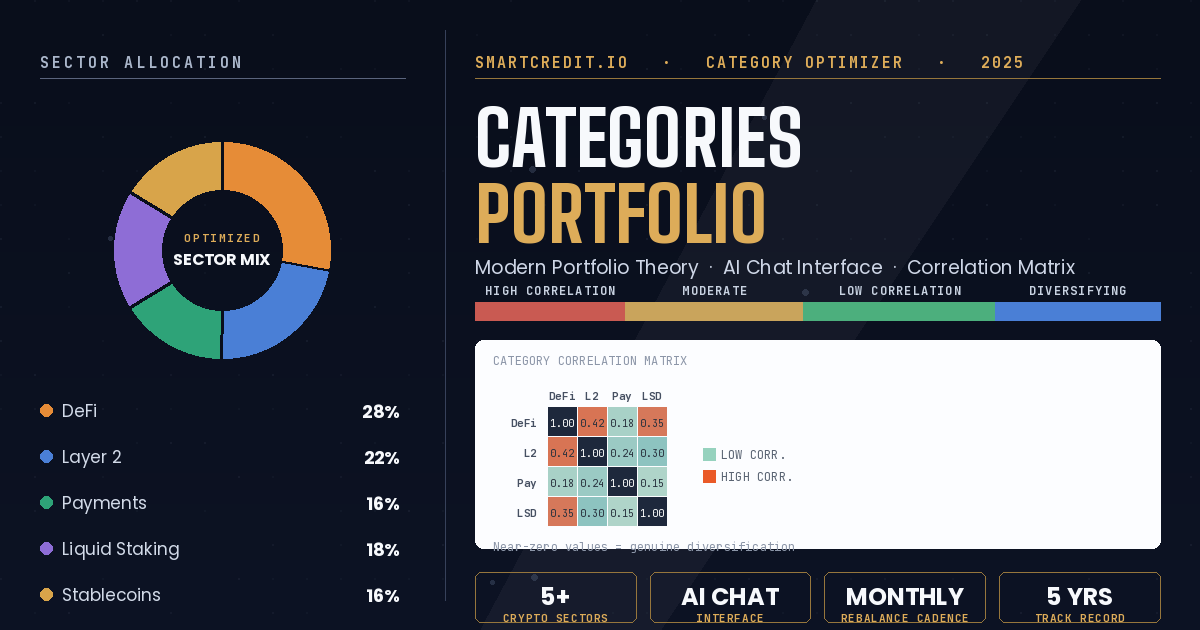
Ten tokens sounds diversified – unless all ten are the same sector. Categories Based Portfolio on SmartCredit.io uses Modern Portfolio Theory across CoinGecko crypto sectors – Layer 1, DeFi, gaming, stablecoins and more – so allocation reflects genuine sector exposure, not just ticker count. Each sector is treated as an index, reducing correlation and improving risk-adjusted returns versus a single-sector heavy portfolio.

Compare Historical DeFi Rates: Why a Single Snapshot Isn’t Enough

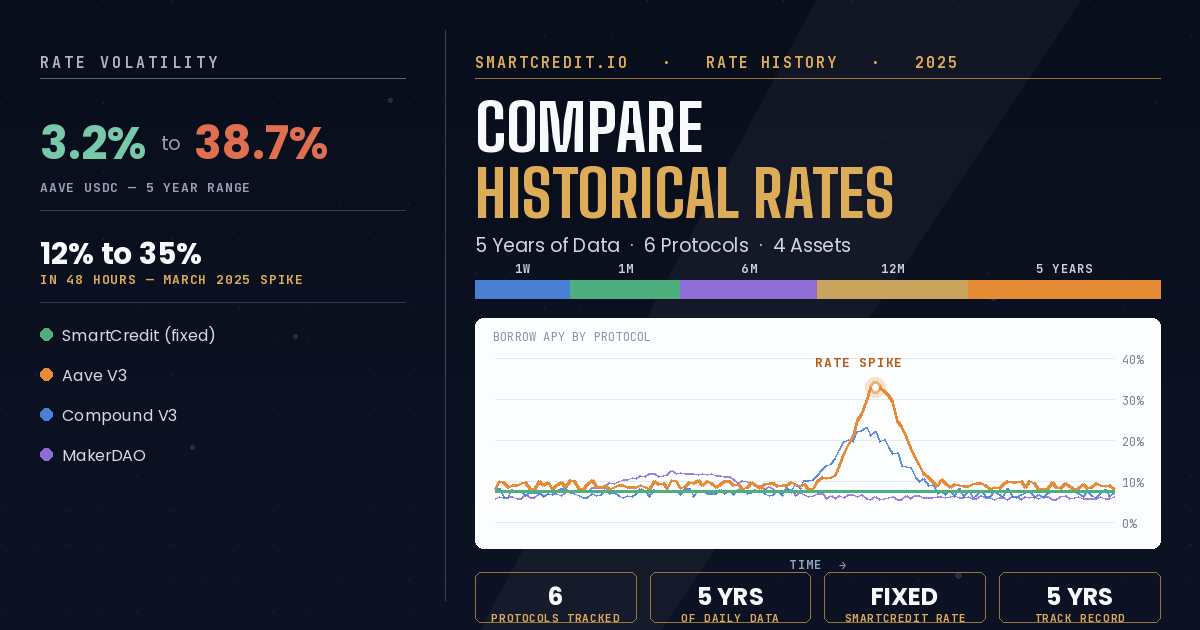
A single rate snapshot tells you today’s number – not whether it is high, low or ordinary. Compare Historical DeFi Rates on SmartCredit.io shows five years of borrowing and lending rates across protocols, letting you judge current rates against their own history. See whether Aave’s rate today is near its five-year floor or ceiling, compare SmartCredit.io fixed rates against variable market cycles, and make data-driven decisions rather than reacting to a number without context.

Loss Provision Fund on SmartCredit.io - how DeFi lenders are protected from borrower defaults - SmartCredit.io

How DeFi Lenders Are Protected: Inside SmartCredit’s Loss Provision Fund

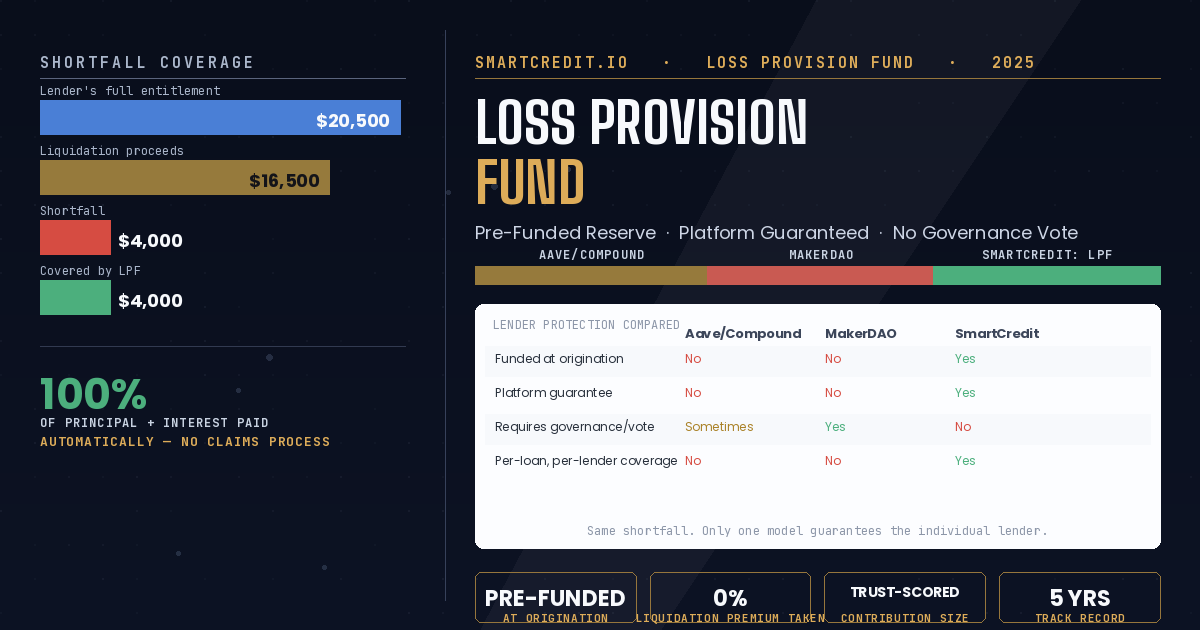
Most DeFi lending platforms offer no backstop when a borrower defaults – lenders simply absorb the loss. SmartCredit.io’s Loss Provision Fund is pre-funded from platform fees and covers any shortfall when liquidation proceeds fall short of the outstanding loan. This post explains how the fund works, what it protects against, and why it makes SmartCredit.io one of the few DeFi lenders where lender capital has a formal first line of defence.