Home » Research » Page 2

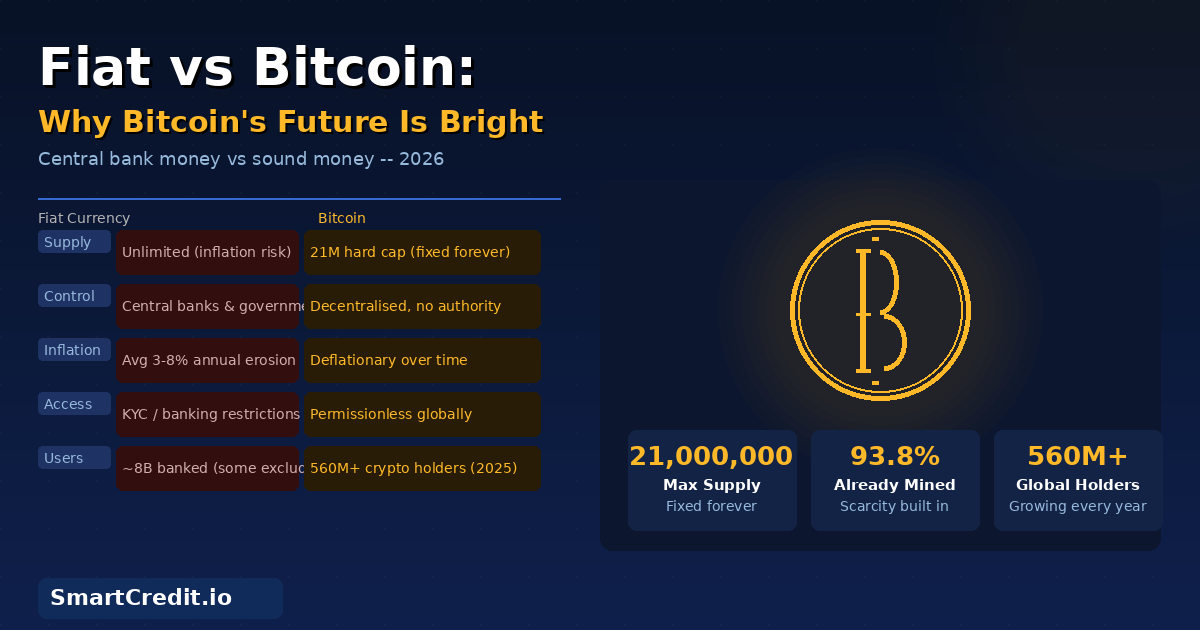
Fiat currency versus Bitcoin: Why is Bitcoin’s future so bright?

Fiat vs Bitcoin for lending: Fiat offers stability (USDC pegged 1:1 to USD) + predictable value. Bitcoin offers appreciation potential + scarcity (21M cap). SmartCredit.io supports both: (1) Borrow stablecoins against BTC collateral (tax-free liquidity, keep BTC exposure, 90% LTV, 8-10% APY), (2) Lend stablecoins for fixed returns (8-15% APY vs 0.5% bank savings). Why Bitcoin collateral wins: Institutional demand (BlackRock ETF), DeFi utility, halving scarcity. Why stablecoin loans win: No volatility risk, spend anywhere, preserve purchasing power. Real strategy: Deposit $10K BTC, borrow $9K USDC at 10% APY, invest USDC at 15% APY, arbitrage 5% spread. Immunebytes audited, 5-year track record. Visit /borrow
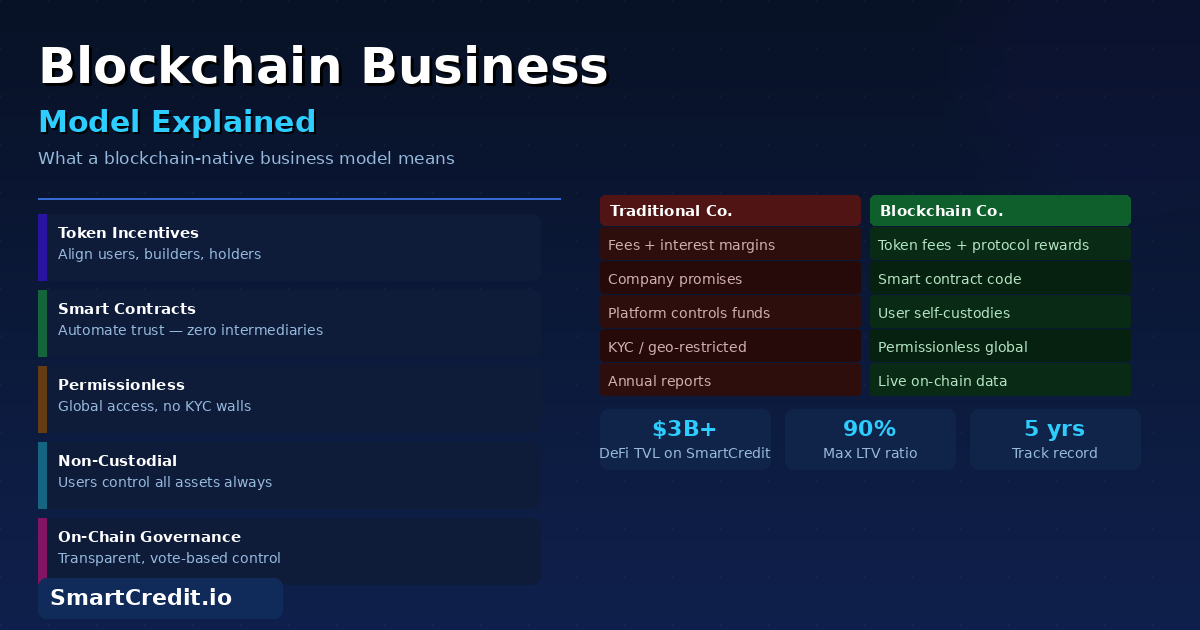
Blockchain Business Model: What Does it Mean

Blockchain business models: (1) Protocol fees – Aave charges 10% of interest spread, (2) Token appreciation – protocol success = token value increases, (3) Staking rewards – users lock tokens for governance + yield, (4) Governance rights – token holders vote on parameters. SmartCredit.io model: Fixed-rate lending (8-15% APY) funded by: lender deposits + protocol reserves. Revenue: interest spread (borrow rate – lend rate). Example: Lenders earn 12% APY, borrowers pay 10% APY, protocol captures 2% spread on $2M TVL = $40K annual revenue. Sustainability: Fees fund development + audits (Immunebytes) + insurance reserves. Competitive advantage: Fixed rates attract risk-averse users. Token utility: Governance + fee discounts. Visit

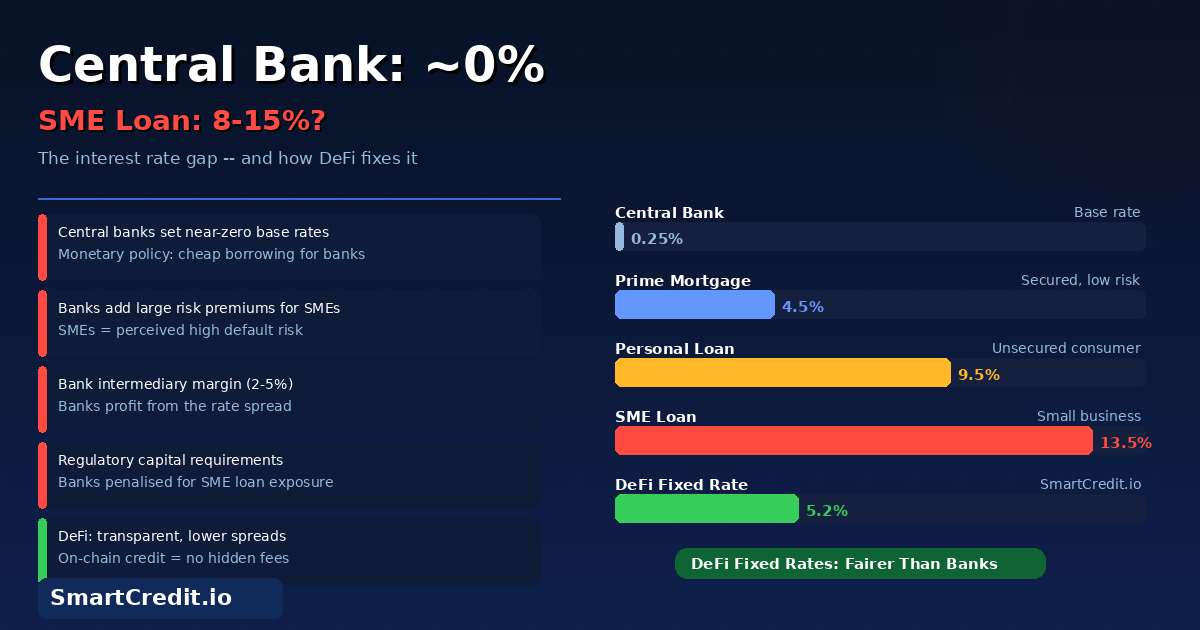
Why is the central bank interest rate so low? Why is the interest rate so high for the SME’s?

Central banks vs SMEs: CBDCs (Central Bank Digital Currencies) threaten small business lending. Why? CBDCs enable direct central bank → consumer deposits, bypassing commercial banks. Impact on SME lending: Commercial banks fund SME loans via deposits. If deposits move to central bank CBDCs, less capital for business loans. DeFi alternative: SmartCredit.io enables SMEs to borrow stablecoins directly using crypto collateral (8-10% APY fixed), no bank intermediary needed. Advantages: Global access, no credit check, instant approval. Risks: Overcollateralization requirement (150% typical), crypto volatility. Real use case: Tech startup with $100K ETH borrows $90K USDC for operations. Immunebytes audited. The future: Hybrid – CBDCs for payments, DeFi for capital formation. Visit /borrow

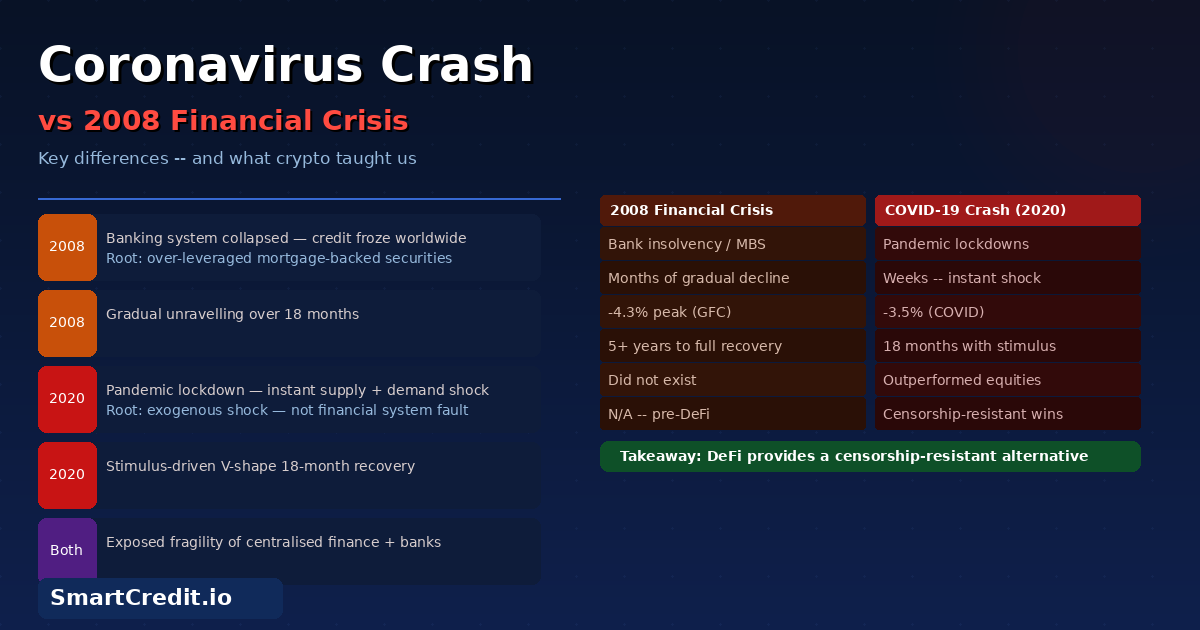
Coronavirus Economic Crash – What is the difference to 2008 Financial Crisis?

Coronavirus crash (March 2020) vs 2008 financial crisis: Both saw liquidity crises, but DeFi emerged as alternative. 2008: Banks froze credit, unemployment 10%, government bailouts. 2020: DeFi offered continuous lending (Aave, Compound, SmartCredit.io maintained 8-15% APY throughout crash). Key difference: DeFi runs on code, not bank decisions. March 2020 data: ETH dropped 70% in 48 hours, but DeFi protocols processed $4B in liquidations without human intervention. SmartCredit.io: Fixed-rate loans protected borrowers from rate spikes (Aave rates spiked to 50%+ during crisis). Lesson: Decentralized finance is crisis-resistant. Immunebytes audited, 5-year track record includes multiple market crashes. Visit

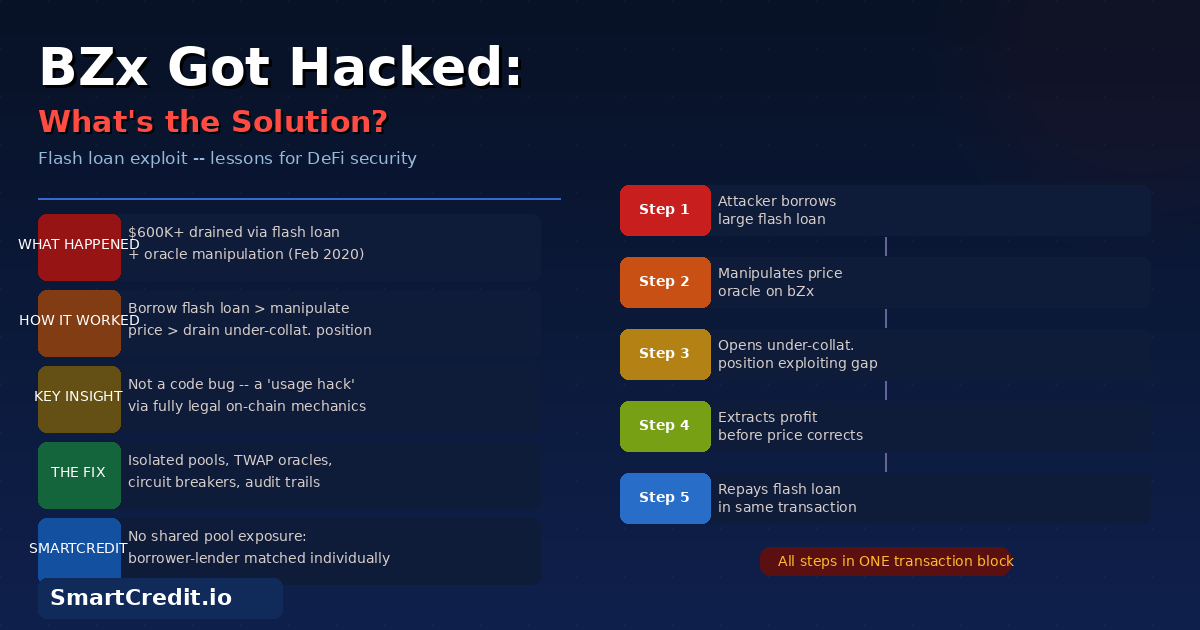
BZx got hacked: What’s the solution?

bZx hack (September 2020): $8M stolen via flash loan attack exposing DeFi smart contract vulnerabilities. How it happened: (1) Attacker borrowed funds via flash loan (uncollateralized), (2) Manipulated oracle price feeds, (3) Profited from price discrepancy, (4) Repaid flash loan in same transaction. Lessons: (1) Oracle manipulation risk – use decentralized price feeds (Chainlink), (2) Flash loan attack vectors – add time delays, (3) Code audits essential – Immunebytes, OpenZeppelin. SmartCredit.io protection: Immunebytes audited smart contracts, Chainlink oracles, 5-year zero-hack record, conservative 90% LTV limits prevent oracle manipulation profitability. Post-bZx: Industry adopted multi-oracle systems, time-weighted average prices (TWAP), circuit breakers. Visit

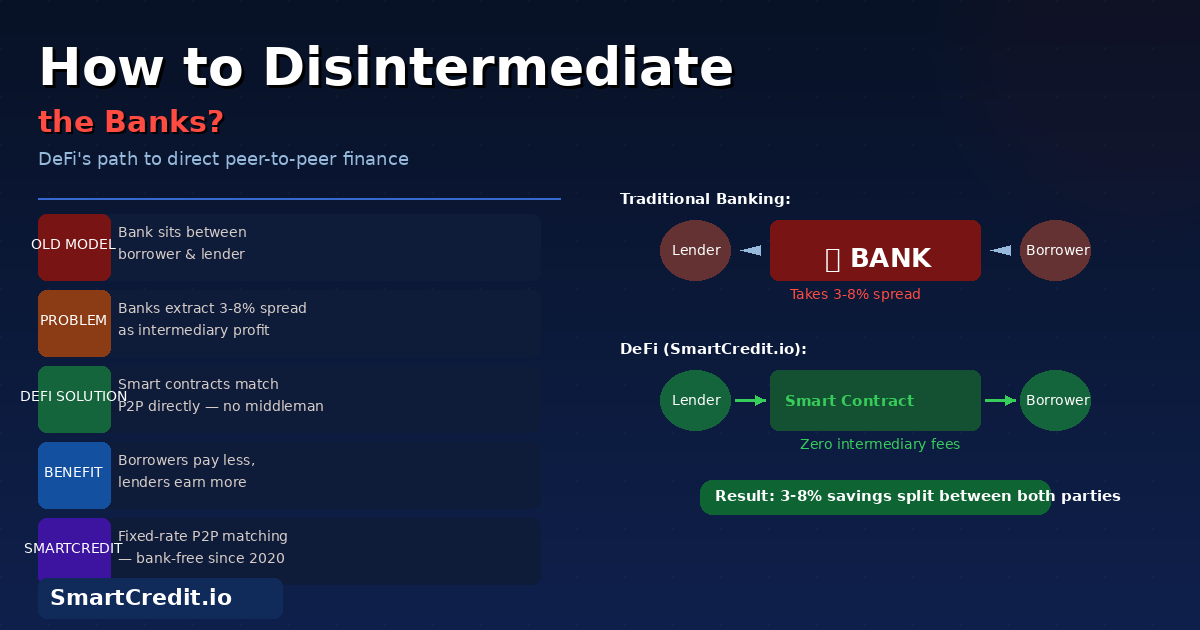
How to Disintermediate the Banks?

Banks earn from five sources: (1) Payments (2-3% fees), (2) Loans (5-20% spread), (3) Trading (0.5-2% commissions), (4) Custody (0.25-1% annual), (5) Investment products (1-2% management fees). DeFi disintermediates all five: (1) Blockchain payments = near-zero fees vs Visa/Mastercard 2.5%, (2) Peer-to-peer lending on SmartCredit.io = 8-15% APY direct vs bank spread capturing, (3) DEX trading = 0.3% vs brokers 1-2%, (4) Self-custody wallets = free vs $100/year bank fees, (5) DeFi funds = 0% management fees. Total savings: $850B annually if 10% banking moves to DeFi. SmartCredit: fixed-rate loans, Immunebytes audited. Visit

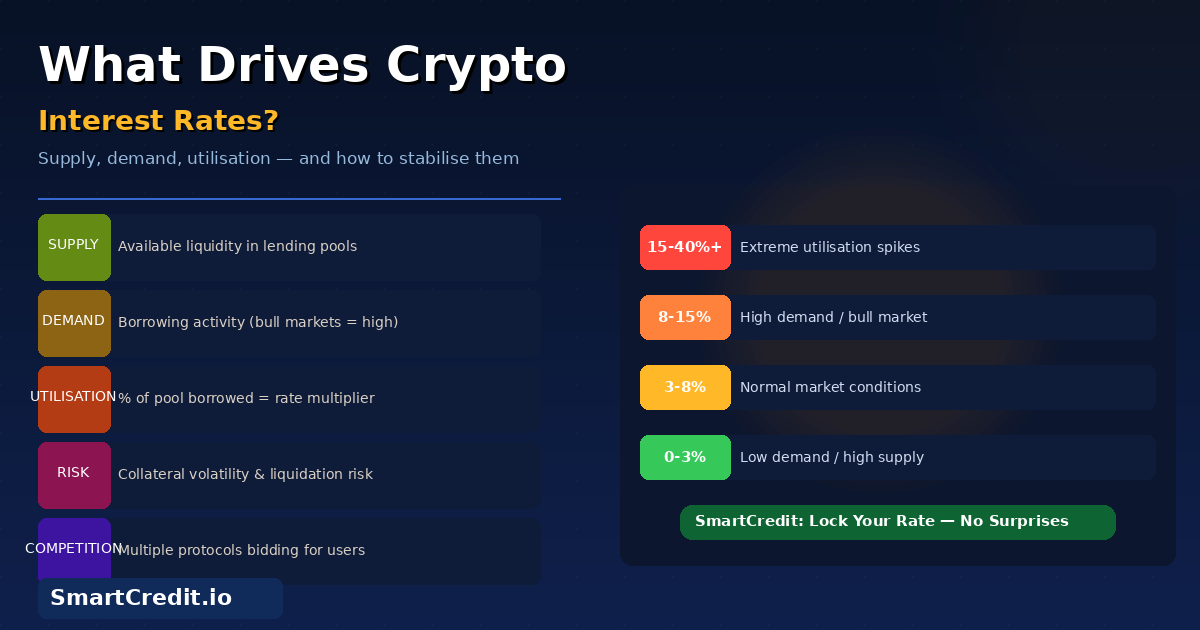
What drives the crypto interest rate and how much should it be?

Crypto interest rates (5-18% APY) vastly exceed traditional savings (0.01-1% APY). Why? Five factors drive this: (1) Supply/demand volatility – DeFi borrow rates spike during bull markets as leverage demand surges. (2) Collateralization – 110-150% overcollateralization compensates lenders for crypto price risk. (3) Platform competition – Aave, Compound, SmartCredit.io compete aggressively. (4) Risk premiums – Smart contract risk, liquidation risk. (5) Utilization rates – When 90%+ of pools are borrowed, rates surge. SmartCredit.io offers 8-15% fixed APY (predictable) vs Aave/Compound 3-25% variable (volatile). Historical data: ETH averaged 12.3% on SmartCredit vs 9.8% on Aave. Visit

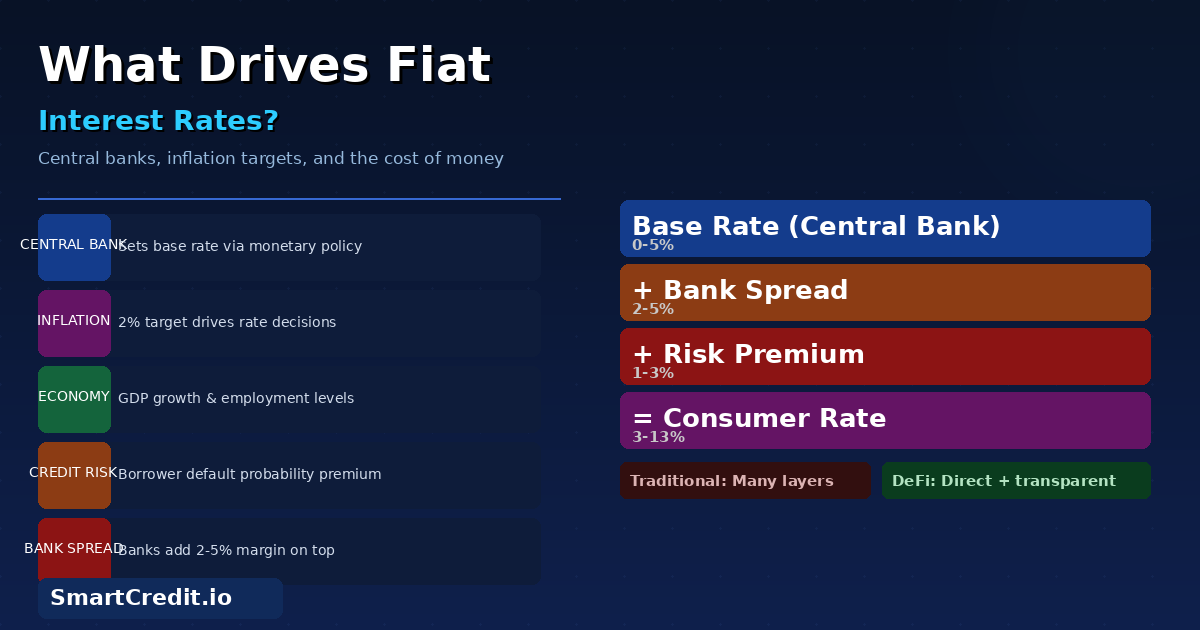
What Drives the Fiat Interest Rate and How Much Should it Be?

Fiat savings accounts pay 0.01-5% APY (US: 0.5-1% typical). Why so low? Central banks suppress rates, fractional reserve banking limits competition, government guarantees (FDIC) reduce risk premiums. Crypto interest offers 8-18% APY because: (1) No central bank manipulation, (2) Market-driven rates, (3) Overcollateralization (110-150%), (4) Platform competition. SmartCredit.io: 8-15% fixed APY on USDC/DAI deposits, Immunebytes audited, 5-year zero-hack record. Real comparison: $10,000 at 0.5% fiat = $50/year. $10,000 at 12% crypto = $1,200/year. That’s 24× more income. Risk differences: Fiat = government guaranteed, crypto = smart contract risk. Visit /lend

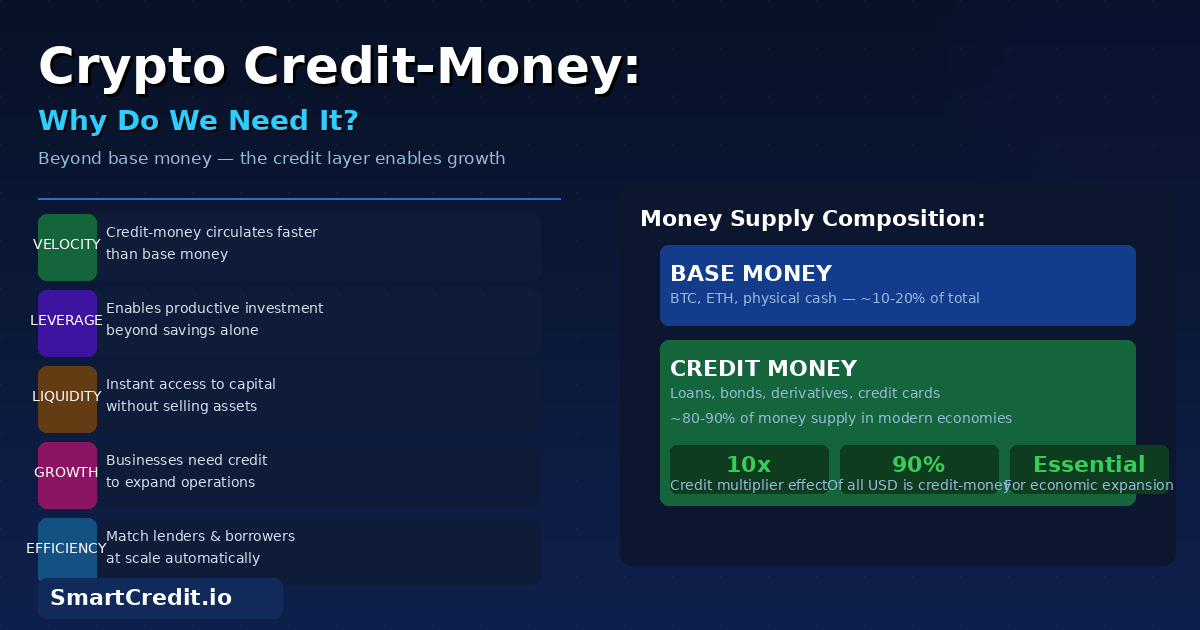
Crypto Credit-Money – Why do we need it?

Crypto credit-money = loans collateralized by cryptocurrency instead of traditional assets. How it works: deposit ETH/BTC as collateral → borrow stablecoins (USDC/DAI) → use capital without selling crypto → repay loan to reclaim collateral. Key differences vs fiat: (1) Overcollateralization (110-200% vs 20-50% fiat mortgages), (2) Instant liquidation if collateral drops, (3) No credit checks, (4) Smart contract enforcement. SmartCredit.io: borrow at 8-10% fixed APY, 90% LTV max, Immunebytes audited. Use cases: tax-free liquidity, leverage trading, bear market strategies. Real example: Deposit $10,000 ETH, borrow $9,000 USDC, keep ETH exposure. Visit /borrow

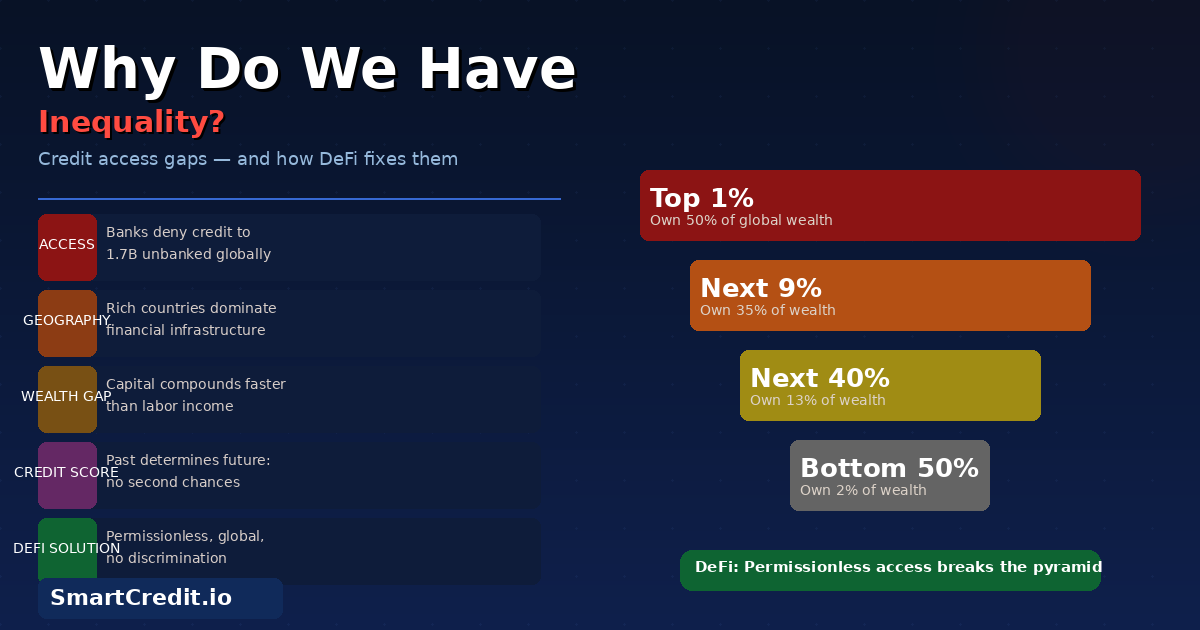
Why do we have inequality?

DeFi reduces financial inequality by democratizing access to credit and investment returns. Traditional finance requires: minimum balances ($10,000+ for wealth management), credit scores (excludes 45M Americans), geographic access (urban branches only). DeFi enables: anyone with $100 to earn 8-15% APY, anyone with crypto to borrow without credit checks, global access 24/7. SmartCredit.io: no minimums, Immunebytes audited, 20,000+ users globally earning fixed returns. Real impact: Unbanked populations access capital, small investors earn institutional-grade yields, transparent rates (no hidden fees). Data: DeFi users in emerging markets grew 706% (2020-2025). SmartCredit fixed-rate model particularly benefits risk-averse users. Visit

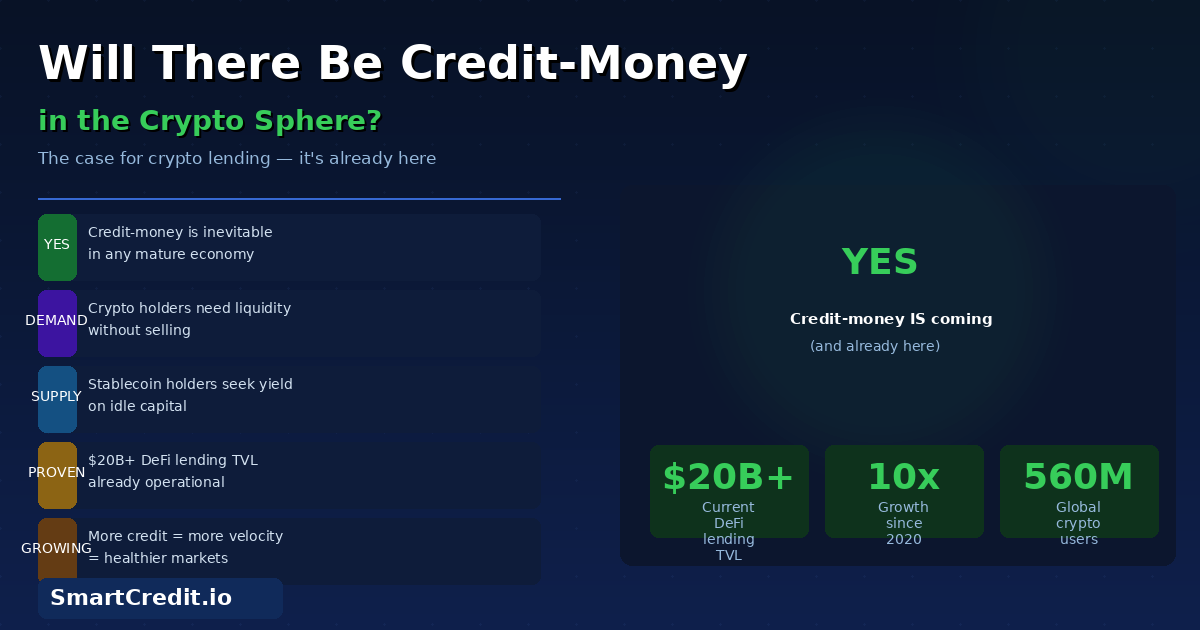
Will There be Credit-Money in the Crypto Sphere?

Credit-money in crypto = stablecoins borrowed against crypto collateral. The system works: (1) Users deposit volatile assets (ETH/BTC), (2) Smart contracts issue stablecoins (USDC/DAI), (3) Borrowers spend/invest without selling crypto, (4) Loans repaid to unlock collateral. Key innovation: algorithmic enforcement replaces banks. Overcollateralization (110-200%) protects against crypto volatility. SmartCredit.io: fixed-rate credit-money (8-10% APY locked for 30-365 days) vs Aave/Compound variable (5-35% APY fluctuates hourly). Historical: March 2025 bull run, variable rates spiked 12% → 38%. SmartCredit users locked 10%, saved 28%. Audit: Immunebytes. Track record: 5 years, zero hacks. Visit /borrow

Crypto Credit Money  –  Will this time be different?

“This time is different” precedes every financial crisis. But crypto credit-money IS structurally different from traditional banking: (1) Transparency – all loans visible on-chain 24/7 vs hidden bank books, (2) Overcollateralization – 110-200% vs fractional reserve 10%, (3) No bailouts – liquidation, not taxpayer rescue, (4) Code enforcement – smart contracts execute automatically, no discretion. Historical crashes: 2008 caused by hidden leverage, opacity, moral hazard. Crypto: March 2020 crash processed $4B liquidations without bailouts, protocols functioned normally. SmartCredit.io: fixed-rate loans (8-10% APY), Immunebytes audited, 5-year zero-hack record, non-custodial. Different foundation = different outcome. Visit