Home » Research
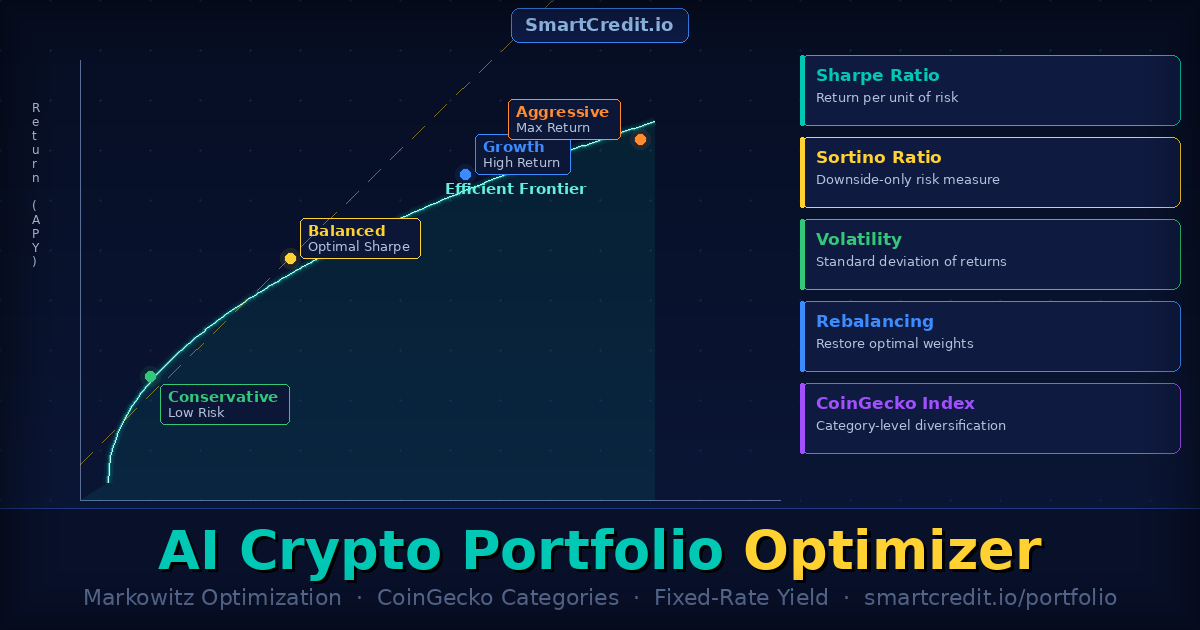
AI crypto portfolio optimizer showing Markowitz efficient frontier with CoinGecko categories, Sharpe Ratio and Sortino Ratio metrics

AI Crypto Portfolio Optimizer: Build a Markowitz-Optimized Portfolio Using CoinGecko Categories

Build optimal crypto portfolios using Modern Portfolio Theory: SmartCredit.io’s AI chatbot analyzes 15 CoinGecko categories (DeFi, Layer-1, Layer-2, Meme, Gaming) and calculates Markowitz-efficient frontiers. Input: risk tolerance (conservative/moderate/aggressive). Output: asset allocation maximizing Sharpe Ratio (return/volatility). Example: Conservative portfolio = 40% BTC, 30% ETH, 20% stablecoins, 10% DeFi, projected 12% annual return, 18% volatility. Plus: SmartCredit fixed-rate yield (8-15% APY) on holdings. Metrics explained: Sharpe Ratio measures risk-adjusted returns, Sortino Ratio focuses downside risk. Why rebalance quarterly: maintain target weights, capture gains. Free AI optimizer at SmartCredit.io. Visit
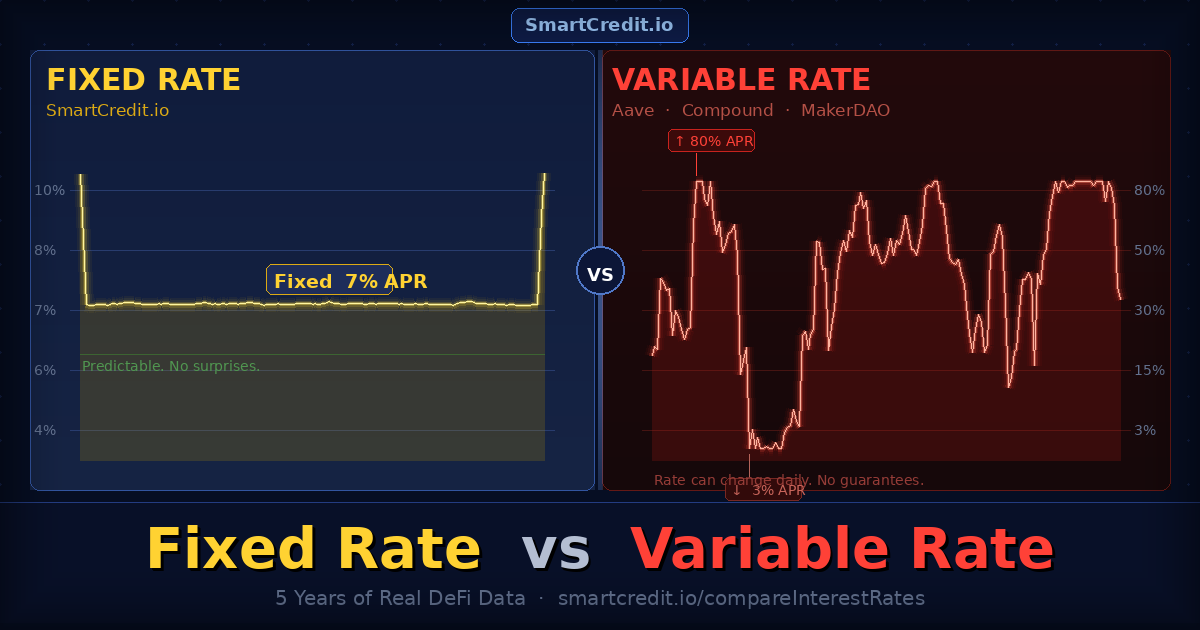
DeFi interest rates comparison chart showing fixed rates from SmartCredit vs volatile variable rates from Aave, Compound and MakerDAO over 5 years

DeFi Interest Rates Comparison: Why Fixed Rates Win for Real-Economy Borrowers

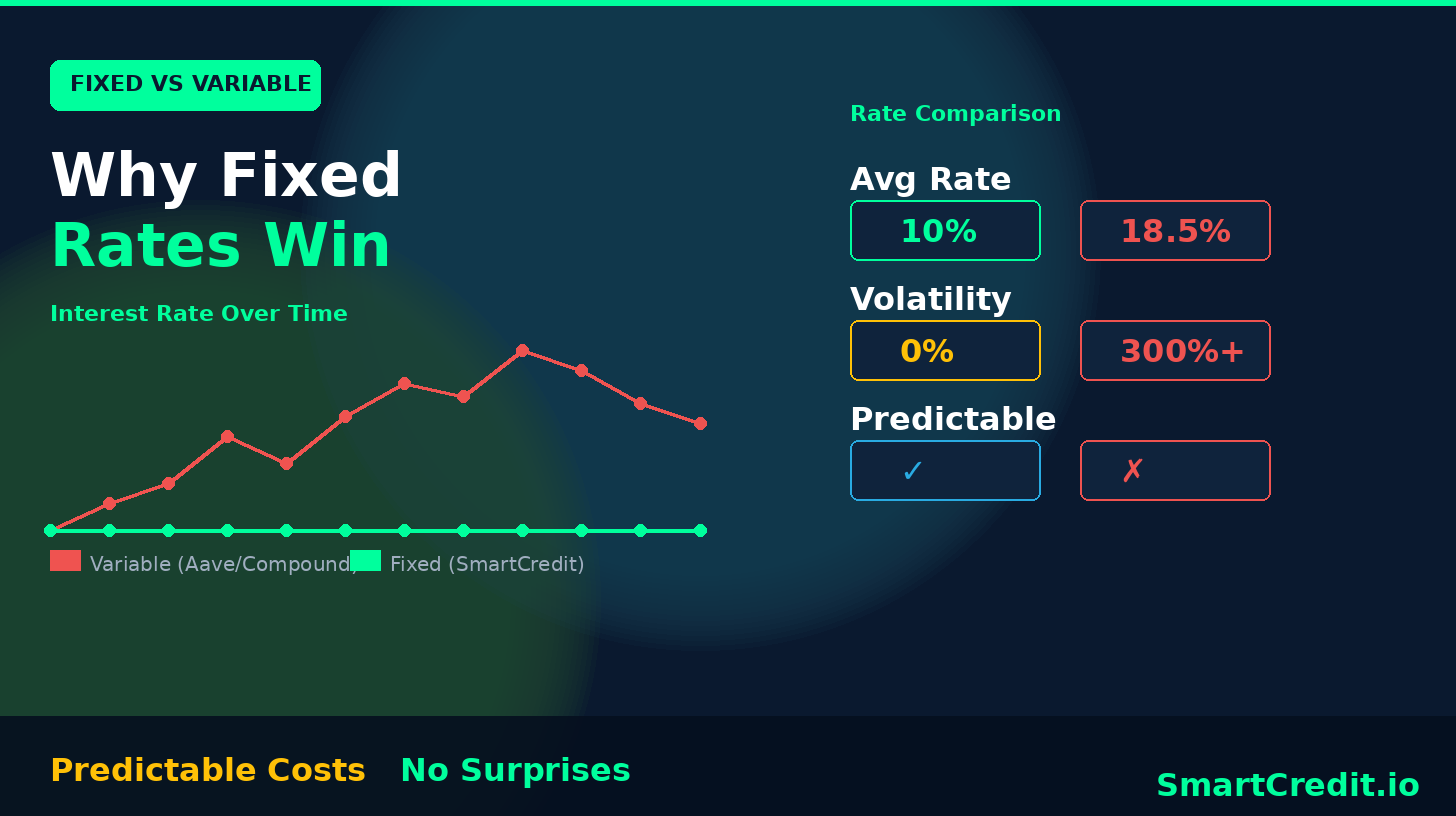
Fixed vs variable DeFi rates: SmartCredit.io offers 8-15% fixed APY (predictable) vs Aave/Compound 3-35% variable (volatile). Real data (5-year analysis): Aave USDC rates ranged 3.2% to 38.7% (1,109% volatility). SmartCredit fixed rates: 8-12% (0% volatility). Who benefits from fixed: (1) Real-economy borrowers – budgeting requires certainty, (2) Traders – leveraged positions need predictable costs, (3) Lenders – stable income planning. Who needs variable: Speculators timing short-term rate dips. March 2025 example: Variable rates spiked 12% → 35% in 48 hours. Fixed users locked 10%, saved 25%. Immunebytes audited, non-custodial. Visit

Fixed Interest Rate vs Variable Interest Rate in DeFi: Why Fixed Rates Win (2026)

Traditional fixed income ($100T+ global market) is 10x larger than money markets ($10T). Yet DeFi inverted this: variable-rate lending dominates (Aave, Compound $20B+ TVL) while fixed-rate barely exists. Why fixed rates win: (1) Budgeting certainty – businesses need predictable costs, (2) Risk management – volatile rates destroy profitability, (3) Institutional adoption – pensions/endowments require stable returns. SmartCredit.io brings traditional finance structure to DeFi: 8-15% fixed APY, 30-365 day terms, non-custodial. Historical proof: March 2025, variable rates spiked 300%+. Fixed users unaffected. The future: DeFi fixed income will surpass variable as institutions arrive. Immunebytes audited. Visit

Islamic Finance Meets DeFi: Complete Guide to Halal Cryptocurrency & Sharia-Compliant Lending

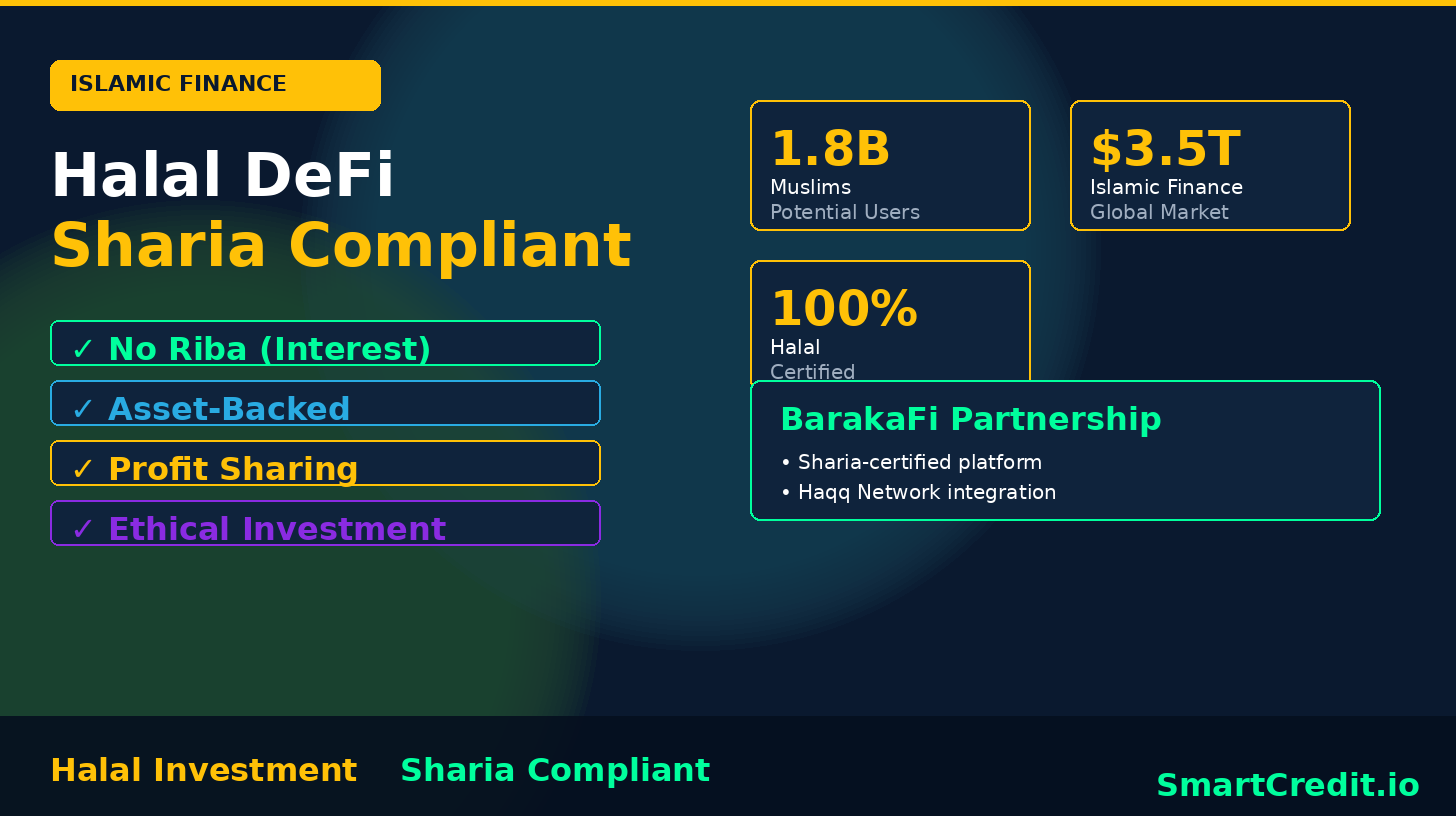
Islamic Finance + DeFi = $3.5T market opportunity serving 1.8B Muslims. Sharia-compliant DeFi requirements: (1) No riba (interest) – structure as profit-sharing, not loans, (2) Asset-backed – every transaction tied to real asset, (3) Ethical screening – no gambling/alcohol/tobacco, (4) Transparent contracts. SmartCredit.io + BarakaFi partnership (Haqq Network): halal crypto lending, riba-free microloans from $10, profit-sharing investment funds, 100% Sharia-certified. Traditional Islamic banking charges 8-12% (called “profit” not interest). BarakaFi offers same structure, blockchain transparency. Addressable market: 25% of global population. First mover advantage. Immunebytes audited. Visit

Low collateral ratio

Low Collateral Ratio: Why It Gives DeFi Borrowers 2.5× More Power

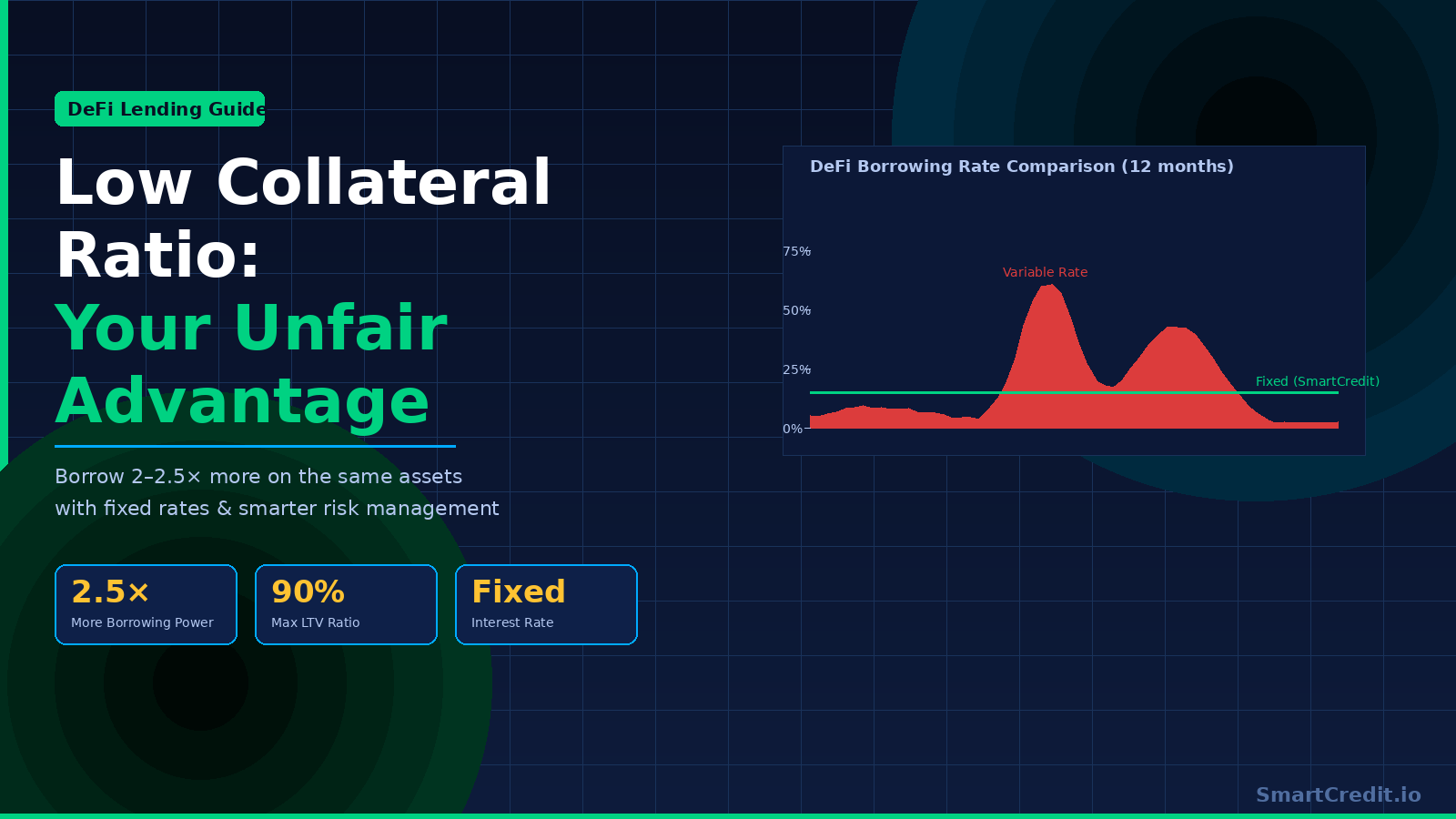
Low collateral ratios give 2-2.5x more borrowing power: 200% ratio = 50% LTV (borrow $5K against $10K). 133% ratio = 75% LTV (borrow $7.5K against $10K). 111% ratio = 90% LTV (borrow $9K against $10K). SmartCredit.io offers up to 90% LTV (111% ratio) vs Aave 80% LTV (125% ratio) vs MakerDAO 66% LTV (150% ratio). Why LTV matters more than interest rates: borrowing $9K at 10% APY = $900 cost. Borrowing $5K at 8% APY = $400 cost. But $4K less capital = missed opportunities costing $1,200+. Net: pay $500 more, gain $4K liquidity. Risk management: fixed rates (8-10% APY), institutional-grade monitoring, Immunebytes audit. Visit /borrow

Crypto Fixed Income and SmartCredit.io

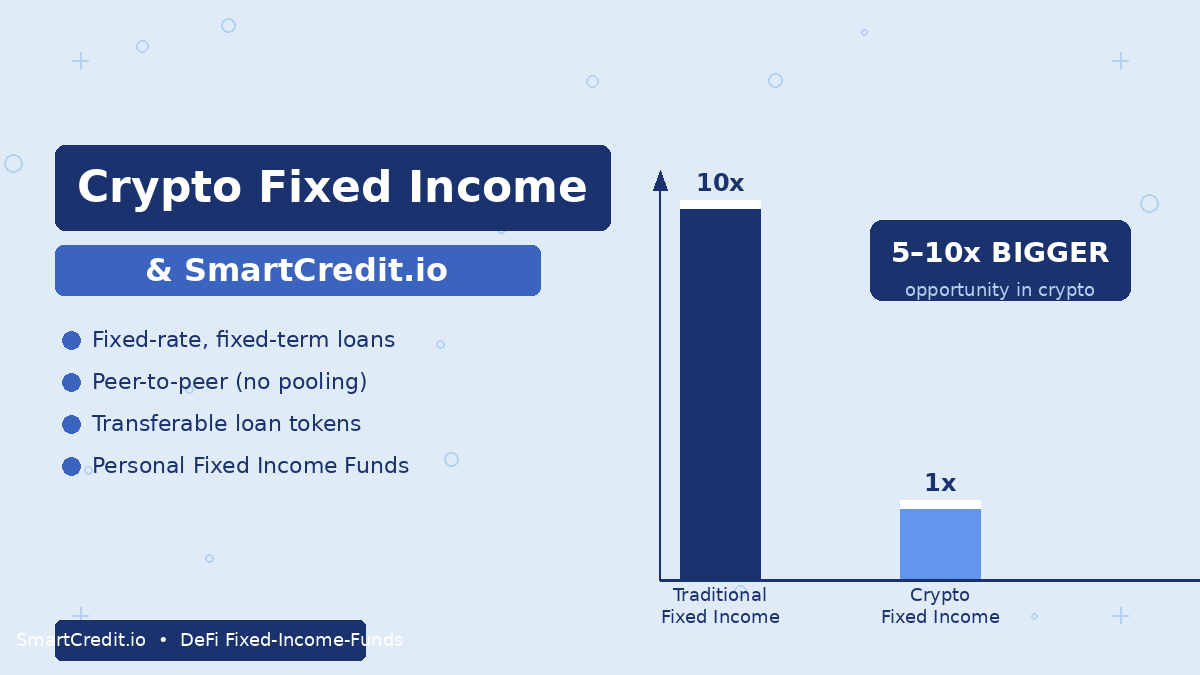
Crypto fixed income paradox: Traditional markets show fixed income 5-10x larger than equities ($100T bonds vs $20T stocks). Yet in crypto, fixed income is 5-10x SMALLER than variable-rate lending. Why? DeFi copied money markets (Aave, Compound) instead of bond markets. SmartCredit.io reverses this: fixed-rate (8-15% APY), fixed-term (30-365 days), peer-to-peer lending mirrors traditional fixed income structure. Advantages: predictable returns for institutions, budgeting certainty for businesses, stable income for retirees. Market opportunity: as crypto matures, institutions demand fixed income. Current: $20B+ variable lending. Future: $200B+ fixed income market. First mover advantage. Immunebytes audited. Visit

Why do we need a crypto credit score in DeFi?

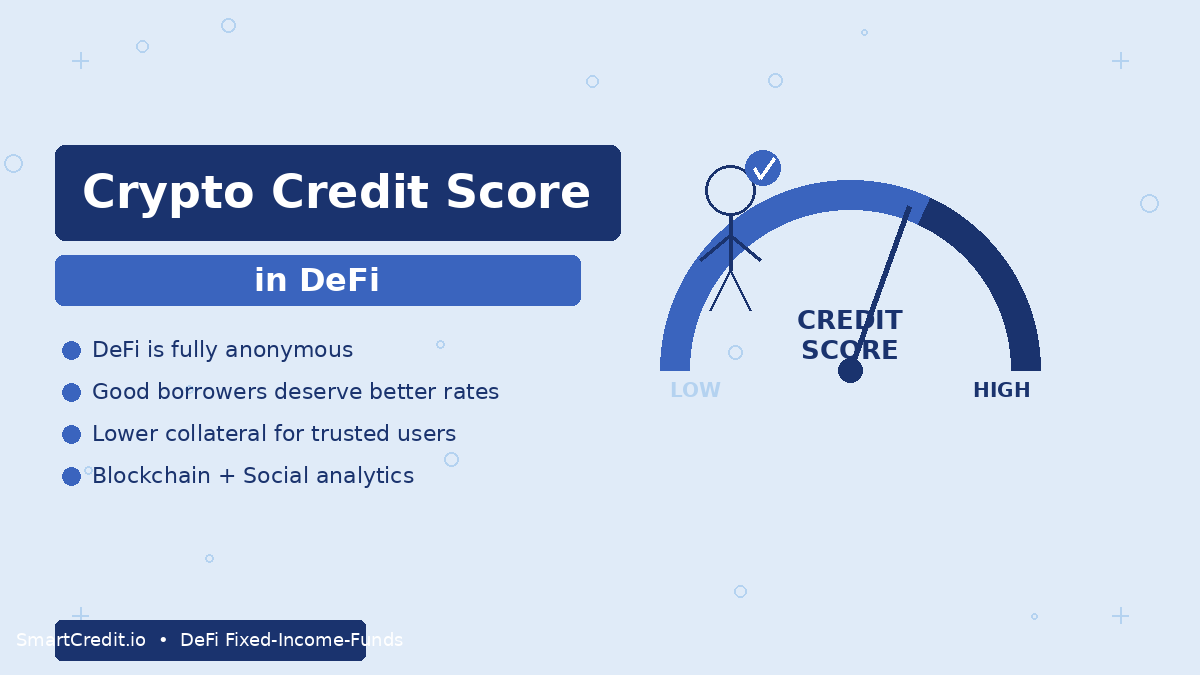
Crypto credit scores reduce DeFi collateral requirements: Current problem – DeFi is anonymous, protocols can’t distinguish good borrowers from bad, everyone pays 150-200% collateral. Solution: voluntary credit score sharing. How it works: (1) Borrower opts-in to share on-chain history, (2) Algorithm analyzes repayment record, wallet age, transaction volume, (3) Good score = better terms (90% LTV vs 66%, 8% APY vs 10%). Privacy preserved: zero-knowledge proofs verify score without exposing identity. Benefits: Good borrowers access 2x more capital, protocols reduce default risk. Adoption timeline: 2025-2027. SmartCredit.io exploring integration. Trade-off: privacy vs better rates. User choice. Visit

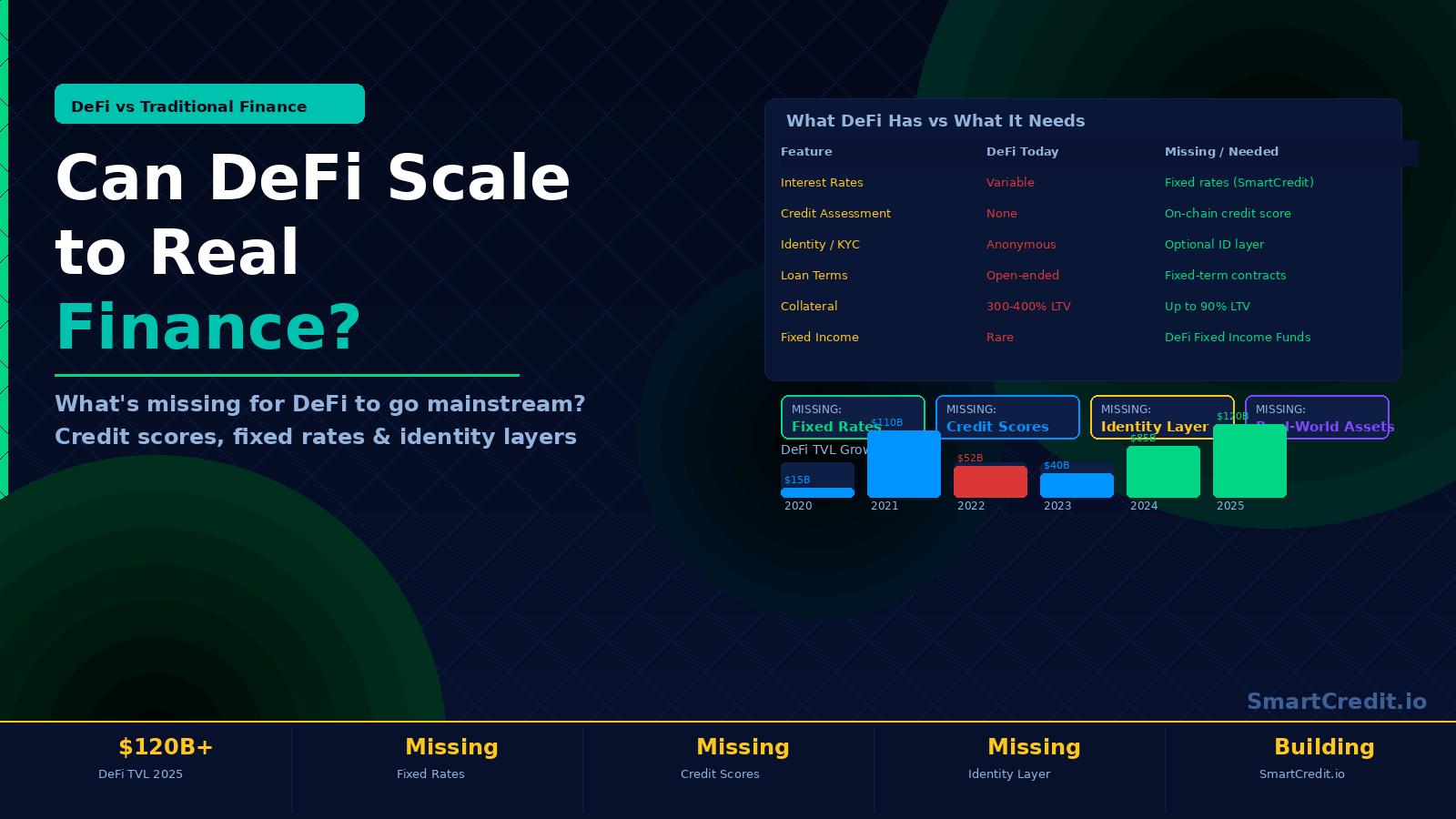
Can DeFi scale to real finance? What is missing?

Can DeFi scale to billions of users? Technical challenges: (1) Ethereum processes 15 TPS vs Visa’s 65,000 TPS, (2) Gas fees spike to $50+ during congestion, (3) Smart contract complexity limits throughput. Solutions implemented: (1) Layer 2 scaling (Polygon, Arbitrum process 4,000+ TPS), (2) Optimistic rollups (batch transactions off-chain), (3) ZK-rollups (cryptographic proofs). SmartCredit.io: Deployed on Polygon for 0.001 gas fees (vs $50 Ethereum), enabling micro-lending. Real data: Polygon processes 10M+ daily transactions. Can support 1B users? Yes, with Layer 2 + sharding. Timeline: Mass adoption 2025-2030. Current capacity: 100M users feasible. Immunebytes audited. Visit

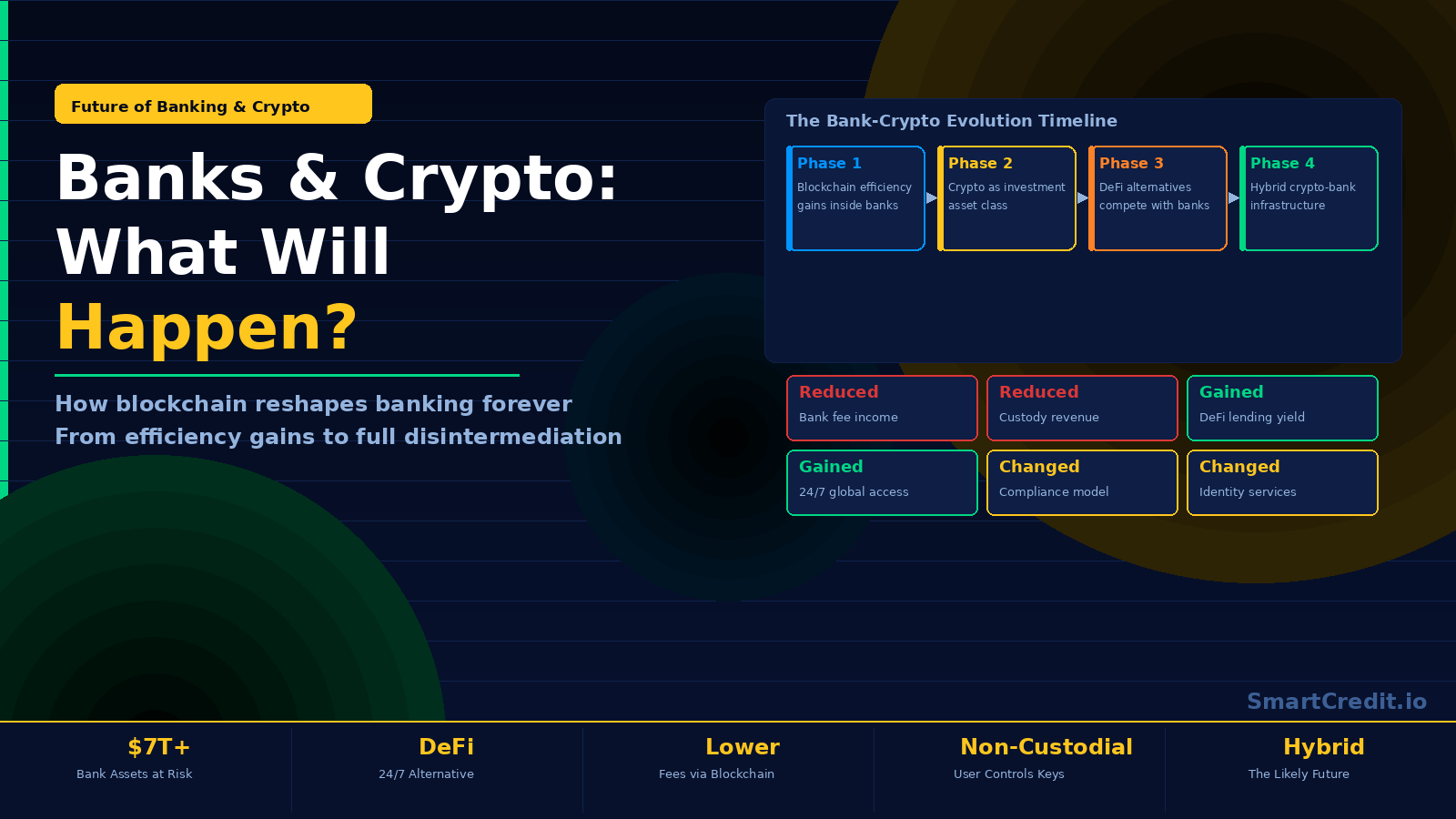
Banks and Crypto: What Will Happen to the Banks?

Banks adopting crypto: JPMorgan (JPM Coin for settlements), Fidelity (crypto custody for institutions), BNY Mellon (digital asset custody), Goldman Sachs (crypto trading desk). Why now? (1) Client demand – 60% institutional investors want crypto exposure, (2) DeFi threatens deposits (users earning 8-15% APY vs 0.5% savings), (3) Regulatory clarity (MiCA, stablecoin frameworks), (4) Revenue opportunity. How they’re competing with DeFi: Offering compliant custody + competitive yields. SmartCredit.io advantage: Pure DeFi (8-15% fixed APY) without banking overhead, Immunebytes audited, non-custodial (you control keys). The tension: Banks want centralized control, crypto demands decentralization. Future: Hybrid platforms winning. Visit

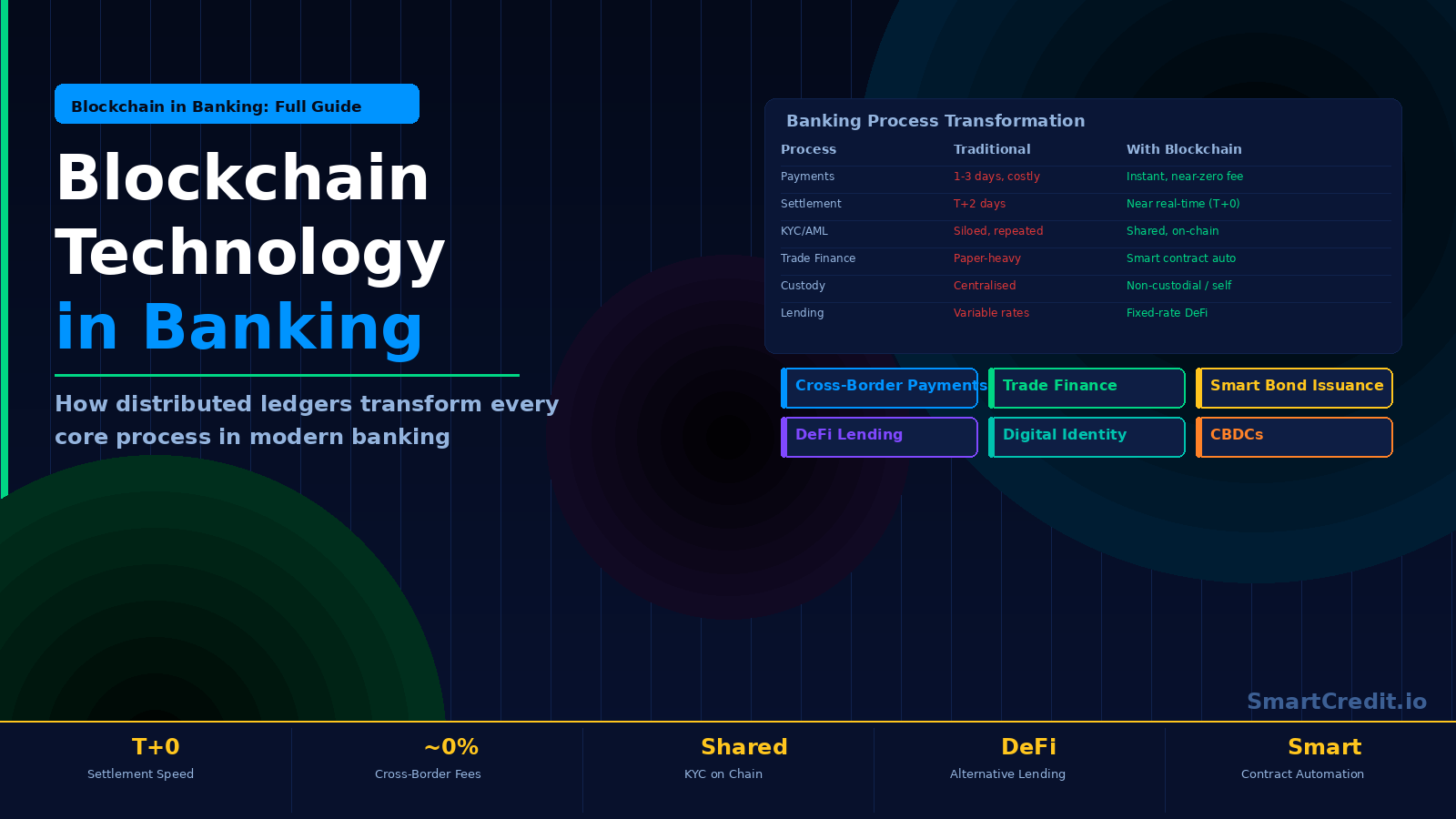
Blockchain Technology in Banking: Everything You Need to Know

Blockchain transforms banking: (1) Cross-border payments – instant settlements vs 3-5 day SWIFT, (2) Lending – DeFi yields 8-15% vs traditional 0.5%, (3) Securities trading – 24/7 tokenized assets vs 9:30am-4pm stocks, (4) KYC/Identity – blockchain-verified credentials. Real implementations: JPM Coin (Permissioned blockchain for institutional payments), Aave/Compound (Decentralized lending), SmartCredit.io (Fixed-rate DeFi lending, 8-15% APY). Banks’ challenge: DeFi offers better rates + transparency. SmartCredit advantage: Immunebytes audited, 5-year zero-hack record, non-custodial. Adoption timeline: Payments (now), lending (2024-2026), full banking replacement (2030+). The future: Hybrid – blockchain efficiency + regulatory compliance. Visit

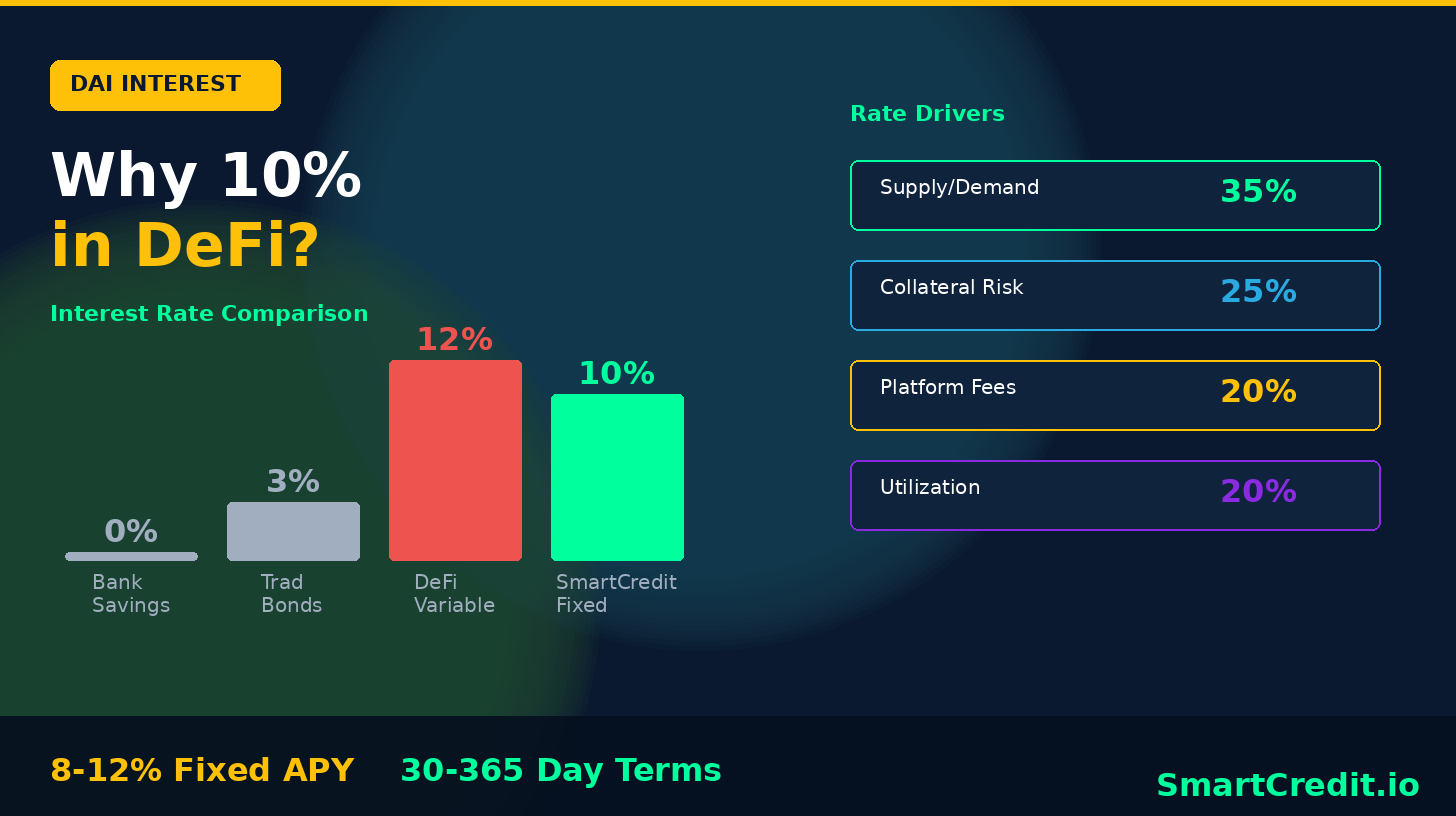
Why is DAI Interest Rate 10% in DeFi?

DAI interest rates in DeFi range from 5-15% APY. SmartCredit.io offers fixed 8-12% APY (30-365 day terms) while Aave and Compound offer variable 3-12% APY. Why so high vs traditional finance (0.5-1% savings)? Five factors: (1) Supply/demand spikes, (2) Collateral requirements (110-150%), (3) Platform competition, (4) Risk premiums, (5) Utilization rates (90%+ = rates surge). Real example: Feb 2025 bull market, DAI borrow rates hit 18% on Aave. SmartCredit users locked 10% fixed, saving 8%. Historical data: DAI averaged 9.2% APY on SmartCredit vs 7.8% on Aave with 40% less volatility. Visit

Blockchain based Financial System – Are we ready?

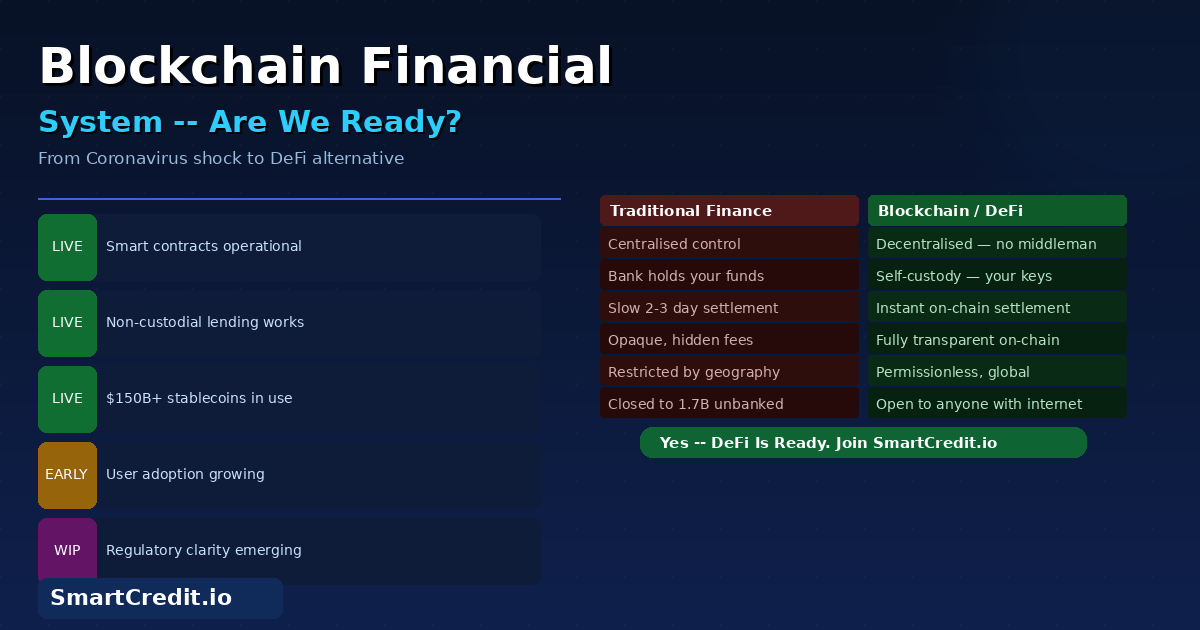
Blockchain financial systems eliminate intermediaries: instead of banks approving loans, smart contracts execute automatically. Core components: (1) Decentralized ledgers (Ethereum, Polygon) record all transactions transparently, (2) Smart contracts enforce lending terms (collateral ratios, interest rates, liquidations), (3) Algorithmic pricing (supply/demand sets rates, not central banks), (4) Non-custodial – users control private keys. SmartCredit.io: Fixed-rate lending (8-15% APY locked for 30-365 days) within blockchain financial system, solving variable-rate volatility. Advantages over traditional: 24/7 global access, transparent fees, no credit checks. Risks: Smart contract bugs (mitigated by Immunebytes audits), price volatility (mitigated by overcollateralization). Track record: 5 years, zero hacks, $2M TVL. Visit