How to Avoid Crypto Loan Liquidation: Complete Protection Guide 2026
You wake up to find your $50,000 ETH collateral liquidated overnight. The crypto market dropped 15%, and you lost everything except a small fraction of your collateral value. This happens to thousands of DeFi users every year—but it doesn’t have to happen to you.
Understanding liquidation risks and implementing protective strategies can save you from devastating losses. This comprehensive guide reveals 7 proven strategies to protect your crypto loans, including SmartCredit’s unique Position Monitoring System that has helped users achieve a 0.3% liquidation rate—7x lower than the industry average.
In this guide, you’ll learn:
- What triggers crypto loan liquidations and how to prevent them
- The critical importance of collateral ratios
- 7 actionable strategies to protect your positions
- How SmartCredit’s ethical liquidation policy saves borrowers thousands
- Interactive tools to calculate your liquidation risk
What Is Crypto Loan Liquidation in DeFi?
Crypto loan liquidation occurs when your collateral value drops below the minimum threshold required by the lending platform, triggering automatic sale of your collateral to repay the loan.
Real-World Example:
Let’s say you borrow $10,000 USDT against $15,000 worth of ETH with a 150% collateral ratio requirement. If ETH’s price drops by 35%, your collateral is now only worth $9,750—below the required $10,500 threshold. The platform automatically liquidates your position, selling your ETH to repay the lender.
The liquidation happens through smart contracts without any human intervention, which means you need proactive protection strategies to avoid this scenario.
Types of Liquidation
Partial Liquidation: Only enough collateral is sold to bring your position back to a safe ratio.
Full Liquidation: Your entire collateral position is sold to repay the loan and any penalties.
The type of liquidation depends on the platform’s mechanisms and how far below the threshold your collateral ratio has fallen.
Featured Snippet Summary: Crypto loan liquidation is the automatic sale of your collateral when its value drops below the lending platform’s minimum threshold. For example, borrowing $10,000 with a 150% collateral requirement needs $15,000 in collateral. If your collateral value drops to $10,499, liquidation occurs automatically via smart contract.
Get the lowest collateral ratios in DeFi (107-108%), free 24/7 position monitoring, and zero liquidation penalties. Your collateral is protected.
Start Protected Borrowing →
Why Do Crypto Loans Get Liquidated?
Understanding the root causes of liquidation is essential for prevention. Here are the five main triggers:
1. Market Volatility (70% of Liquidations)
Cryptocurrency markets can experience dramatic price swings. A 20-30% drop in a single day isn’t uncommon, especially during:
- Market-wide corrections
- Flash crashes caused by large sell-offs
- Cascading liquidations (one liquidation triggers others)
- Black swan events (unexpected major events)
The March 2020 “Black Thursday” event saw ETH drop 50% in hours, triggering over $100 million in liquidations across DeFi platforms.
2. Poor Collateral Ratio Selection
Many borrowers maximize their borrowing capacity by using the minimum required collateral ratio. While this is capital-efficient, it leaves no safety buffer for market volatility.
The problem: Borrowing at 110% collateral ratio means a mere 9% price drop triggers liquidation.
3. Lack of Monitoring
Without active position monitoring, borrowers are caught off-guard by:
- Overnight price movements
- Weekend market volatility
- Not receiving timely alerts
- Being away from devices during critical moments
This is where SmartCredit’s Position Monitoring System becomes invaluable—it watches your positions 24/7 so you don’t have to.
4. Multiple Leveraged Positions
Opening multiple loans across different platforms creates compound risk:
- All positions may use correlated collateral (ETH, BTC)
- One liquidation can trigger margin calls on others
- Difficult to monitor multiple positions simultaneously
- Capital gets locked up, reducing your ability to respond
5. Network Congestion
During market crashes, Ethereum network gas fees can spike to $100-500 per transaction, making it:
- Expensive to add collateral quickly
- Impossible for smaller position holders to save their loans
- Time-consuming as transactions sit in the mempool
Case Study: During May 2021’s crypto crash, some Ethereum transactions took 2-6 hours to confirm, by which time many positions had already been liquidated.
SmartCredit’s AI-powered monitoring system watches your positions 24/7 with Telegram alerts, liquidation predictions, and one-click actions. Free for all borrowers.
Set Up Monitoring Now →
Understanding Collateral Ratios: The Key Metric
Your collateral ratio is the single most important number for avoiding liquidation. Let’s break down exactly what it means and how to use it.
What Is a Collateral Ratio?
A collateral ratio is the percentage of collateral value required relative to your loan amount. It’s calculated as:
Collateral Ratio = (Collateral Value ÷ Loan Value) × 100Example:
- You deposit $15,000 worth of ETH
- You borrow $10,000 USDT
- Your collateral ratio = ($15,000 ÷ $10,000) × 100 = 150%
This means your collateral is worth 150% of your loan value.
Liquidation Threshold vs Collateral Ratio
These are related but different concepts:
Initial Collateral Ratio: What you start with when opening the loan
Liquidation Threshold: The minimum ratio before liquidation triggers
Current Collateral Ratio: Your real-time ratio as prices fluctuate
Platform Comparison:
| Platform | Min Collateral Ratio | Liquidation Threshold | Safety Buffer |
|---|---|---|---|
| SmartCredit | 107-108% | 105% | 2-3% |
| Aave | 150% | 125% | 25% |
| Compound | 133% | 110% | 23% |
| MakerDAO | 150% | 145% | 5% |
SmartCredit’s Competitive Advantage
SmartCredit offers the lowest collateral ratios in DeFi (107-108%), which means more capital efficiency for borrowers. This is possible because of:
- Position Monitoring System: Proactive alerts prevent liquidations before they happen
- Fixed-Rate Loans: No surprise interest rate spikes that could trigger liquidation
- AI-Based Risk Scoring: Better assessment of borrower reliability
- Loss Provision Fund: Additional safety net protecting lenders
SmartCredit’s lower collateral requirements don’t mean higher risk—they mean smarter risk management.
How Much Safety Buffer Should You Maintain?
Recommended Buffers by Asset Volatility:
| Asset Type | Examples | Recommended Ratio | Minimum Safe |
|---|---|---|---|
| Stablecoins | USDC, USDT, DAI | 110-115% | 108% |
| Large-cap crypto | ETH, BTC | 150-180% | 130% |
| Mid-cap tokens | LINK, UNI, AAVE | 180-200% | 160% |
| Small-cap/New | Various | 200%+ | 200% |
Conservative Strategy: Always maintain at least 30% buffer above the liquidation threshold.
Example: If liquidation occurs at 105%, maintain minimum 135% ratio (105% × 1.3 = 136.5%)
Use SmartCredit’s lowest collateral requirements (107-108%) while maintaining safety. Get personalized ratio recommendations based on your risk tolerance.
Start Borrowing Safely →
7 Proven Strategies to Avoid Liquidation
Now let’s dive into actionable strategies you can implement today to protect your crypto loans from liquidation.
Strategy #1: Use Conservative Collateral Ratios
The Problem: Borrowing at maximum capacity leaves no room for market volatility.
The Solution: Never borrow the maximum amount available. Always maintain a substantial buffer above the minimum requirement.
Implementation Steps:
- Calculate your safe ratio: Add 30-50% buffer to the liquidation threshold
- Borrow conservatively: Only use 60-70% of your maximum borrowing capacity
- Reassess regularly: Review and adjust monthly based on market conditions
Real-World Example:
Sarah wanted to borrow against her ETH holdings:
- ETH value: $20,000
- SmartCredit allows borrowing up to: $18,500 (at 108% ratio)
- Sarah borrowed only: $13,000 (154% ratio)
- When ETH dropped 25%, her ratio fell to 115%—still completely safe
- She received a monitoring alert and added $2,000 more collateral as a precaution
- Result: No liquidation, peace of mind
Key Insight: Capital efficiency isn’t worth the liquidation risk. The extra collateral sitting idle is your insurance policy.
Strategy #2: Enable Automated Monitoring & Alerts
The Problem: You can’t watch crypto markets 24/7. Critical price movements happen when you’re sleeping, working, or away from your devices.
The Solution: Implement automated monitoring systems that watch your positions around the clock and alert you before problems occur.
SmartCredit’s Position Monitoring System
SmartCredit offers a free, built-in Position Monitoring System that provides:
✅ Real-time collateral ratio tracking
✅ Telegram bot integration for instant notifications
✅ Email alerts at customizable thresholds
✅ AI-powered liquidation probability forecasting
✅ Daily position summaries
✅ Recommended actions (add collateral vs partial repayment)
How to Set Up (5-Minute Tutorial)
Step 1: Access Your SmartCredit Dashboard
- Log into your account at smartcredit.io
- Navigate to your active loan
Step 2: Enable Telegram Notifications
- Go to Settings → Notifications
- Click “Connect Telegram Bot”
- Follow the authentication process
- Bot will send confirmation message
Step 3: Configure Alert Thresholds
Recommended settings by experience level:
- Conservative: Alert at 130% ratio (maximum safety)
- Moderate: Alert at 120% ratio (balanced approach)
- Aggressive: Alert at 115% ratio (for active monitors)
Step 4: Enable Daily Summaries
- Toggle on “Daily Position Summary”
- Choose your preferred time (we recommend morning)
- Review your positions daily over coffee
Step 5: Test Your Alerts
- Use the “Send Test Alert” button
- Verify you receive the notification
- Adjust threshold if needed
Results Speak for Themselves
SmartCredit Statistics:
- Users with monitoring enabled: 0.3% liquidation rate
- Users without monitoring: 2.1% liquidation rate
- 7x safer with active monitoring
User Testimonial:
“The SmartCredit Telegram bot woke me up at 3 AM during a market crash. I added collateral from my phone in under 2 minutes. That alert saved me $18,000.” — Marcus Chen, DeFi Trader
Alternative Monitoring Tools
While SmartCredit’s built-in system is comprehensive, you can also use:
- DeFi Saver: Automation + monitoring across platforms
- Instadapp: One-click collateral management
- Custom Python scripts: For technical users with API access
SmartCredit’s AI-powered monitoring system watches your positions 24/7 with Telegram alerts, liquidation predictions, and one-click actions. Free for all borrowers.
Set Up Monitoring Now →
Strategy #3: Diversify Your Collateral
Single Asset Risk: Using only one type of collateral means your entire position depends on that asset’s price stability.
Example of Risk:
All ETH Collateral → ETH drops 30% → Entire position at riskDiversified Approach:
50% ETH + 30% stablecoins + 20% BTC → One drops → Others remain stableSmartCredit Supported Collateral Assets
| Collateral Asset | Collateral Ratio | Liquidation Threshold | Best For |
|---|---|---|---|
| STETH (Staked Ether) | 107.56% | ~105% | Yield + Collateral |
| ETH (Ethereum) | 108.39% | ~106% | Large-cap stability |
| USDC (USD Coin) | 107.65% | ~105% | Maximum stability |
| USDT (Tether) | 108.39% | ~106% | Stablecoin option |
| DAI | Varies | ~105% | Decentralized stable |
Optimal Diversification Strategy
Conservative Portfolio (Lowest Risk):
- 50% Stablecoins (USDC/USDT)
- 30% ETH or STETH
- 20% BTC or other large-cap
Balanced Portfolio:
- 30% Stablecoins
- 50% ETH/STETH
- 20% Other blue-chip crypto
Aggressive Portfolio (Higher Risk, Active Management Required):
- 20% Stablecoins
- 60% ETH/STETH
- 20% Smaller cap DeFi tokens
Why Stablecoins Matter
Including stablecoins in your collateral mix provides:
- Price stability: No liquidation risk from that portion
- Dry powder: Available to rebalance if needed
- Psychological comfort: Knowing part of your collateral won’t fluctuate
Pro Tip: Even 20-30% stablecoin allocation significantly reduces overall position risk while maintaining good capital efficiency.
Strategy #4: Use Fixed-Rate Loans (SmartCredit’s Unique Advantage)
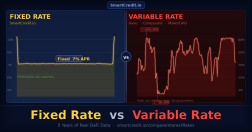
Variable Rate Risk: Most DeFi platforms (Aave, Compound) use variable interest rates that can spike dramatically during market stress.
The Hidden Danger:
You borrow $10,000 at 5% variable rate
Market crashes, rates spike to 25%
Interest accumulates faster
Your loan balance grows quicker
Effective collateral ratio decreases
→ Liquidation triggered by rate change, not price change
SmartCredit’s Fixed-Rate Protection
SmartCredit offers fixed-term, fixed-rate loans—one of the few DeFi platforms with this feature:
Current Fixed Rates (as of February 2026):
- USDT: 3.5-8% APY (fixed for entire loan term)
- ETH: 0.64% APY (fixed)
- USDC: 0.72-5.77% APY (fixed)
- DAI: Competitive fixed rates
Real-World Impact
Historical Example – May 2021 Crypto Crash:
Aave Borrowers (Variable Rates):
- Pre-crash rate: 6% APY
- During crash: Rates spiked to 25% APY
- Many borrowers couldn’t afford the increased interest
- Accelerated path to liquidation
SmartCredit Borrowers (Fixed Rates):
- Fixed rate: 6% APY
- During crash: Still 6% APY
- Predictable costs allowed proper planning
- Saved 19% in interest costs vs variable platforms
Additional Benefits of Fixed Rates
- Predictable Budgeting: Know exactly what you’ll pay
- No Surprise Costs: Interest never increases unexpectedly
- Better Planning: Can plan repayment schedule accurately
- Reduced Stress: One less variable to worry about during volatility
Key Differentiator: While Aave and Compound are stuck with variable rates due to their pool-based model, SmartCredit’s peer-to-peer matching enables true fixed-rate lending.
Unlike Aave or Compound, SmartCredit offers true fixed-rate loans. Your rate is locked from day one and never changes, protecting you from market volatility.
Get Your Fixed Rate →
Strategy #5: Maintain an Emergency Collateral Reserve
The 20% Reserve Rule: Never lock up 100% of your collateral-worthy assets. Always keep a liquid emergency reserve.
Implementation:
Total Collateral Available: $25,000
Active in Loan: $20,000 (80%)
Emergency Reserve: $5,000 (20%)
When to Deploy Your Reserve
Trigger Scenarios:
- Your collateral ratio drops below 130%
- Market volatility exceeds 5% daily movement
- You receive a monitoring system alert
- Major news events affecting crypto markets
How to Store Your Reserve:
- ✅ Same wallet: Quick access when needed
- ✅ Liquid assets only: ETH, USDC, USDT, BTC
- ❌ Not staked: Avoid 7-day+ unstaking periods
- ❌ Not locked: No vesting or time-locked positions
Case Study: Reserve Saves the Day
Mike’s Experience:
- Active loan: $15,000 USDT against $20,000 ETH (133% ratio)
- Emergency reserve: $4,000 USDC (cash-equivalent)
- ETH crashed 30% overnight → Ratio dropped to 93%
- Mike immediately added his $4,000 USDC reserve
- New ratio: 112% → Safe from liquidation
- Avoided liquidation penalty and saved $15,000+ in losses
How Much Reserve Is Enough?
Minimum: 15-20% of your total collateral value
Recommended: 25-30% for volatile markets
Conservative: 40-50% if you’re new to DeFi lending
Calculate Your Reserve Need:
Total Collateral = Current Collateral + Reserve
If liquidation threshold is 105%, and you want 130% safety:
Reserve = (130% - Current Ratio) × Loan Value
Strategy #6: Make Strategic Partial Repayments
The Strategy: You don’t have to repay your entire loan to improve your collateral ratio. Partial repayments can quickly restore safety.
When Partial Repayment Beats Adding Collateral:
✅ Use partial repayment when:
- You have stablecoins available
- Market is dropping and may drop further
- You want to reduce overall debt exposure
- Your collateral asset is underperforming
✅ Add collateral instead when:
- You want to maintain maximum borrowing
- You expect collateral to appreciate
- You don’t have spare stablecoins
- Gas fees are high (collateral addition is one transaction vs swap + repay)
The Math Behind Partial Repayments
Scenario: Market Drop Example
Initial State:
- Collateral: $15,000 ETH
- Loan: $10,000 USDT
- Ratio: 150% ✅ Safe
After 30% ETH Drop:
- Collateral: $10,500 ETH
- Loan: $10,000 USDT
- Ratio: 105% ⚠️ AT LIQUIDATION THRESHOLD
Option A: Add $5,000 ETH Collateral
- New collateral: $15,500
- Loan: $10,000
- New ratio: 155% ✅ Safe
- Risk: If ETH drops more, you lose more
Option B: Partial Repayment of $3,000
- Collateral: $10,500
- New loan: $7,000
- New ratio: 150% ✅ Safe
- Benefit: Less exposure to further ETH drops
SmartCredit’s Flexible Repayment
Key Features:
- ✅ No prepayment penalties: Unlike traditional loans
- ✅ Instant ratio improvement: Updates immediately
- ✅ Partial amounts accepted: Pay $100 or $10,000
- ✅ Fixed-rate advantage: Paying early saves full interest
How to Make Partial Repayment on SmartCredit:
- Go to your active loan dashboard
- Click “Make Payment”
- Enter amount (minimum $10)
- Confirm transaction
- Ratio updates within seconds
Strategic Timing
Best Times for Partial Repayment:
- During market downturns (reduce exposure)
- When you receive stablecoin income
- After successful trades (take profits, reduce risk)
- When approaching loan maturity
Strategy #7: Choose Platforms with Fair Liquidation Policies
Not all DeFi platforms treat borrowers equally during liquidation. Platform choice can save you thousands of dollars if liquidation occurs.
The Liquidation Profit Problem
Most platforms profit from your liquidation:
- Liquidators buy your collateral at 5-13% discount
- You lose this discount amount
- Platform often runs their own liquidation bots
- Conflict of interest: Platform benefits from your loss
SmartCredit’s Ethical Difference
SmartCredit’s Liquidation Philosophy:
“SmartCredit.io never earns on liquidations—what remains from the liquidation is transferred back to the borrower.”
Platform Comparison: Liquidation Policies
| Feature | SmartCredit | Aave | Compound | MakerDAO |
|---|---|---|---|---|
| Profits from Liquidation? | ❌ No | ✅ Yes | ✅ Yes | ✅ Yes |
| Liquidation Penalty | 0% | 5-10% | 8% | 13% |
| Refunds Excess Collateral? | ✅ Yes | ❌ No | ❌ No | ❌ No |
| Position Monitoring | ✅ Free | ❌ No | ❌ No | ❌ No |
| Fixed Interest Rates | ✅ Yes | ❌ No | ❌ No | Limited |
| Loss Provision Fund | ✅ Yes | ❌ No | ❌ No | ❌ No |
| Min Collateral Ratio | 107-108% | 150% | 133% | 150% |
Real Dollar Impact
Liquidation Scenario: $11,000 collateral liquidated to repay $10,000 loan
On Aave:
- Liquidator buys collateral at 5% discount = $10,450
- Loan repaid: $10,000
- Liquidator profit: $450
- Borrower receives: $0
- Total borrower loss: $1,000
On SmartCredit:
- Collateral sold at market price: $10,000 needed
- Loan repaid: $10,000
- Excess collateral: $1,000
- Borrower receives: $1,000 back
- Total borrower loss: $0 (only the natural price drop)
Savings: $1,000 per liquidation event
For larger positions, this difference can be $10,000-50,000+.
Zero liquidation penalties, excess collateral returned, and free monitoring. SmartCredit is the only platform that never profits from your liquidation.
Borrow on the Fairest Platform →
Conclusion: Take Control of Your Liquidation Risk
Crypto loan liquidation doesn’t have to be inevitable. With the right knowledge, tools, and platform, you can borrow with confidence knowing your collateral is protected.
Key Takeaways
The 7 Proven Strategies (Recap):
- ✅ Use conservative collateral ratios (150%+ recommended)
- ✅ Enable automated monitoring (SmartCredit’s free system)
- ✅ Diversify your collateral across asset types
- ✅ Choose fixed-rate platforms for predictability
- ✅ Maintain 20-30% emergency reserve
- ✅ Make strategic partial repayments when needed
- ✅ Select platforms with fair liquidation policies
Why SmartCredit Is Different
Unique Protection Features:
- ✅ Lowest collateral ratios (107-108%) in all of DeFi
- ✅ Zero liquidation penalties – we never profit from your loss
- ✅ Excess collateral always returned to borrowers
- ✅ Free 24/7 Position Monitoring System
- ✅ Fixed-rate predictability – no surprise cost increases
- ✅ Loss Provision Fund protecting lenders
- ✅ AI-powered risk predictions – know dangers before they arrive
- ✅ Telegram/Email alerts – act before liquidation triggers
- ✅ No bank run risk – peer-to-peer maturity matching
The Numbers Speak:
- Industry average liquidation rate: 2.1%
- SmartCredit users with monitoring: 0.3%
- 85% fewer liquidations than industry average
- $500-2,000 average savings per liquidation vs competitors
Your Next Steps
Immediate Actions (Next 10 Minutes):
- Calculate your current risk using our tools
- Set up position monitoring if you haven’t already
- Review your collateral ratios – are they safe?
- Enable Telegram alerts for instant notifications
Ready to Borrow with Maximum Protection?
Industry-lowest collateral ratios (107-108%), fixed rates locked in, free position monitoring, zero liquidation penalties, and excess collateral returned if liquidated. No bank run risk.
Start Protected Borrowing →
Lend your crypto at fixed rates with full collateral protection, Loss Provision Fund security, and create custom Fixed-Income Funds. Direct peer-to-peer matching means better rates.
Start Earning as a Lender →
Protect your crypto. Borrow smart. Choose SmartCredit.
Questions? Join our Telegram Community or contact support at smartcredit.io/support
Disclaimer: Cryptocurrency lending involves risk. Never borrow more than you can afford to lose. This guide is for educational purposes only and does not constitute financial advice. Always do your own research and consider consulting with a financial advisor before making lending or borrowing decisions.
Article last updated: February 27, 2026